Skip to content
Long Voyage
an aerial view of a beach with houses on it

Destinations

California & the West

Los Angeles, the Pacific coast and the California west.

31 places

Griffith Observatory
Los Angeles, CAlandmarkAbout 1.5 hours

Griffith Observatory

Year-round · best at sunset

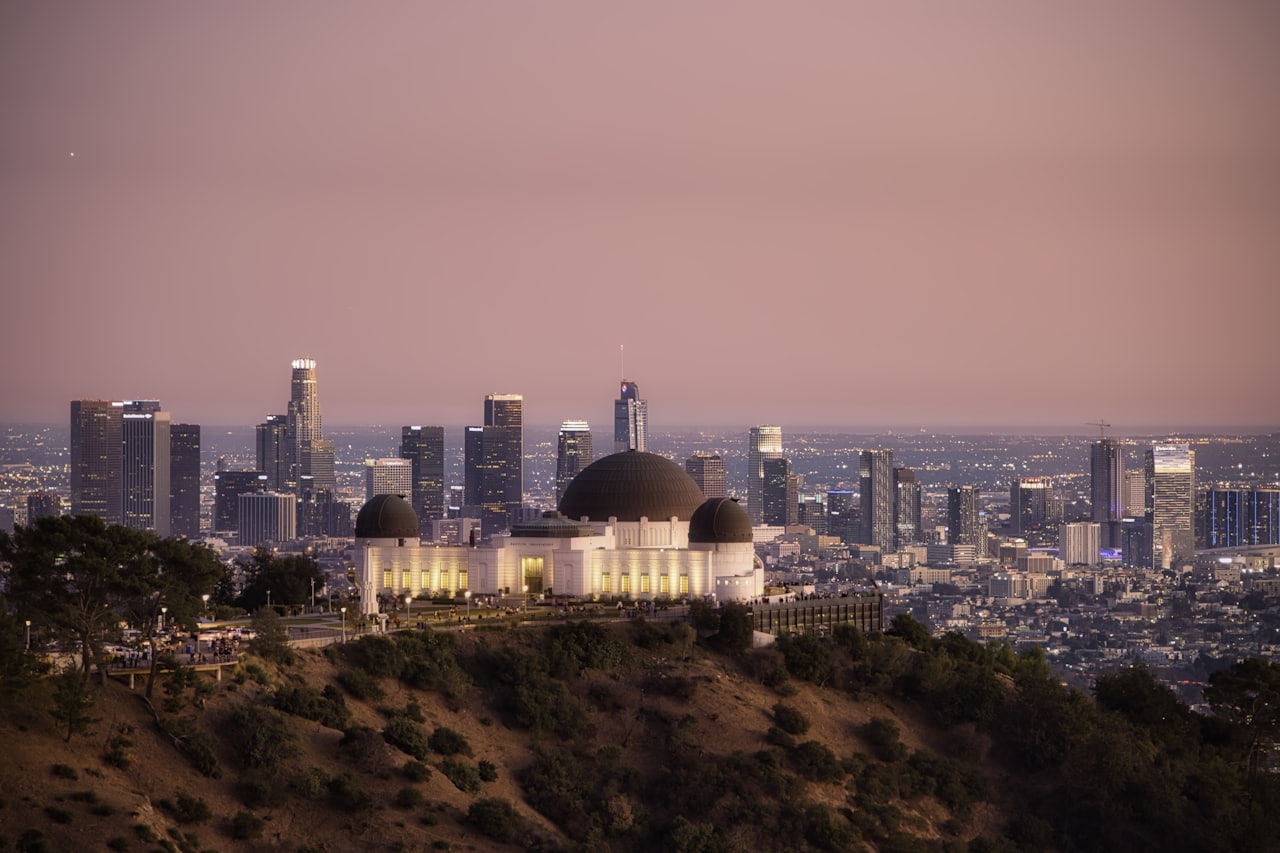
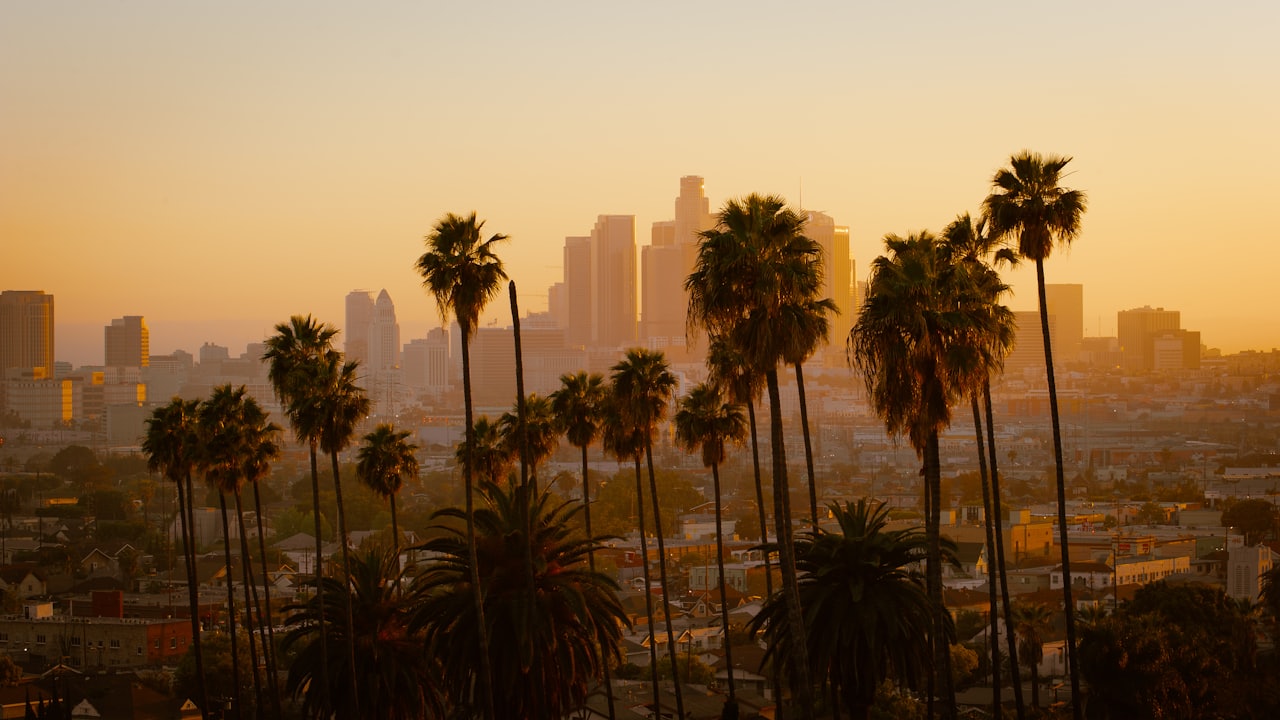
An Art Deco public observatory on the southern slope of the Hollywood Hills. Its terraces take in the whole Los Angeles basin and a distant view of the Hollywood Sign — one of the city’s most iconic viewpoints.

Guide’s notes

The observatory was built on a single condition from its benefactor — that its telescopes stay free to the public, in the belief that one look through a telescope can change how a person sees the world. Its Foucault pendulum is a classic way to witness the Earth’s rotation without ever leaving the ground.

Photo spot: The west lawn — the observatory dome and the Hollywood Sign in one frame; the east terrace over downtown (a sea of city lights after sunset).
Hollywood Walk of Fame & TCL Chinese Theatre
Los Angeles, CAlandmarkAbout 1 hour

Hollywood Walk of Fame & TCL Chinese Theatre

Year-round

Pink terrazzo stars stud the pavement for blocks on end. In the forecourt of the Chinese Theatre — a 1927 building in Orientalist style — the concrete keeps the hand- and footprints of many film stars.

Guide’s notes

A candid note helps here: the real streetscape can feel a long way from the Hollywood of the imagination. One intriguing detail — a star on the Walk of Fame is a commercial arrangement that must be applied and paid for, not purely an honour.

Photo spot: The forecourt hand- and footprints at the Chinese Theatre; close-ups of the terrazzo stars; the Dolby Theatre steps looking toward the Hollywood Sign.

Hollywood Sign Viewpoints
Los Angeles, CAlandmarkAbout 45 minutes

Hollywood Sign Viewpoints

Year-round · best visibility in the morning

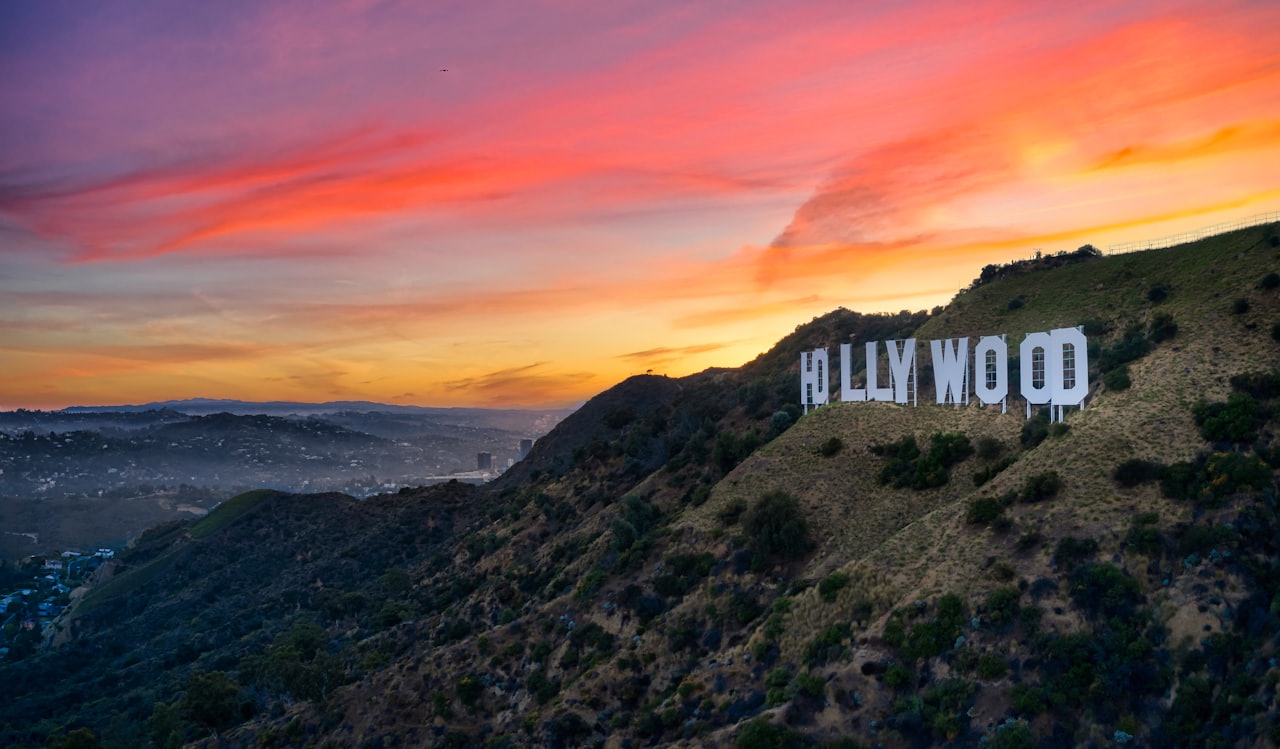
The giant white letters on the hillside went up in 1923 as a real-estate advertisement (originally reading HOLLYWOODLAND), and later became the symbol of the entire film industry.

Guide’s notes

It began life as a real-estate billboard — the original letters read HOLLYWOODLAND — before becoming the symbol of an entire film industry. Once so dilapidated it nearly collapsed, it was rebuilt when a group of well-known figures each sponsored a letter.

Photo spot: From the west side of Griffith Observatory; toward Lake Hollywood Park (confirm vehicle rules).

A Major Film Studio & Theme Park
Universal City, CAvenueFull day (about 8 hours)

A Major Film Studio & Theme Park

Year-round · avoid summer and holiday peaks

A film-themed park distinguished by a working studio tour, where a tram runs among backlots and soundstages; its film- and show-themed rides make up a full day.

Guide’s notes

Its defining difference from other parks is the working studio tour: a tram takes you through real, still-in-use backlots and soundstages rather than rides alone — a genuine look at how films and shows are made.

Photo spot: The park’s landmark globe; themed street sets; backlot views from the studio tram.

The Getty Center
Los Angeles, CAmuseumAbout 3 hours

The Getty Center

Year-round

A hilltop complex of white travertine designed by Richard Meier, reached by a dedicated tram. It holds European painting and decorative arts, and its Central Garden is a work of landscape art in itself.

Guide’s notes

Here the architecture rewards attention as much as the collection: the walls are clad in Italian travertine, deliberately left with its fossil textures and rough-split faces, and the whole complex is arranged along the ridgeline so that arrival — beginning at the tram station — is itself a designed sequence.

Photo spot: Overlooking the Central Garden (its spiral pool); the white geometric facades against blue sky; the west terrace over the LA basin and the Pacific.

Santa Monica Pier & Beach
Santa Monica, CAcoastalAbout 2 hours

Santa Monica Pier & Beach

Year-round · best May–Oct

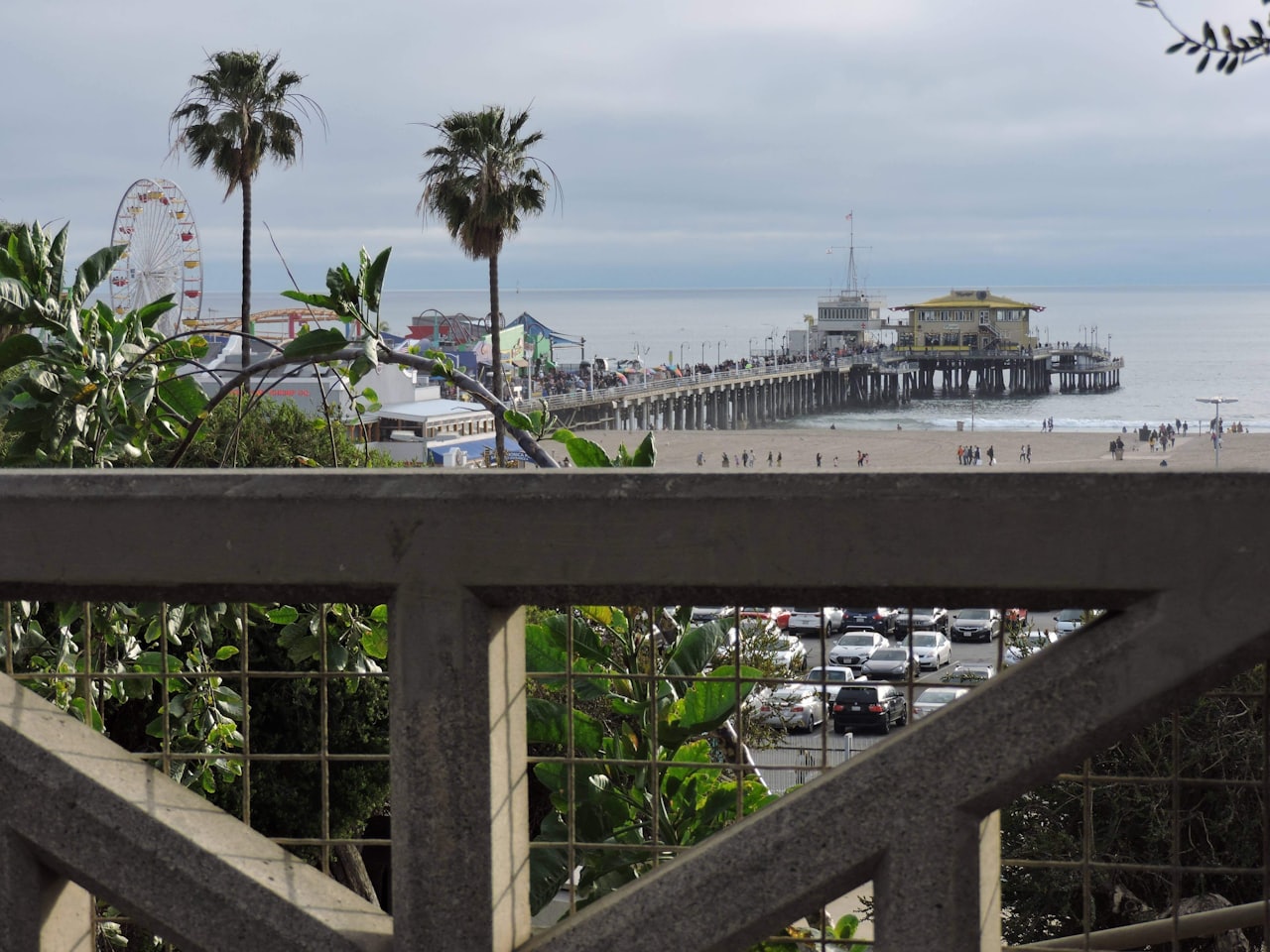
A little amusement park and Ferris wheel on the timber pier, marking the western end of Route 66. Broad sands and a bike path run south toward Venice Beach.

Guide’s notes

The pier marks the western end of Route 66 — the highway that ran all the way from Chicago to the Pacific, carrying Depression-era migration westward, post-war road trips and the whole idea of the American dream: keep heading west until the road runs out.

Photo spot: The pier’s Ferris wheel at sunset (backlit silhouette); the Route 66 end sign; the beach boardwalk.

Venice Beach
Venice, CAcoastalAbout 1 hour

Venice Beach

Year-round

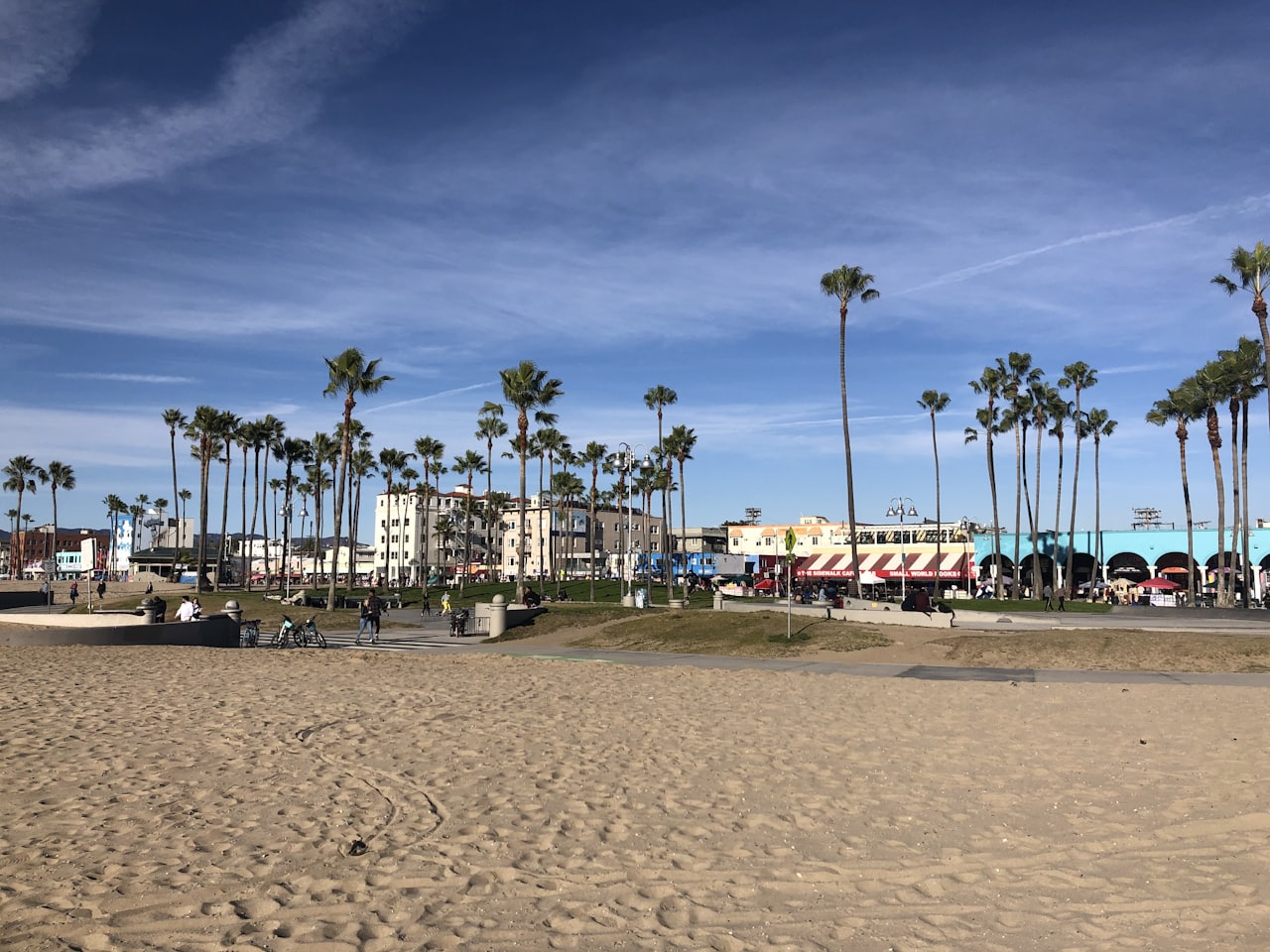
A beachfront boardwalk famous for its street culture — murals, the open-air Muscle Beach gym, a skate park and street performers. Part of the originally planned canal district survives, with waterways and footbridges.

Guide’s notes

The place has an intriguing origin: a developer set out to recreate Venice in California, digging canals and importing gondolas — most of the canals were later filled in to make roads. A failed utopia that grew into something else entirely.

Photo spot: The graffiti wall; the skate park; the footbridges of the canal district.

Beverly Hills & Rodeo Drive
Beverly Hills, CAshoppingAbout 1.5 hours

Beverly Hills & Rodeo Drive

Year-round

An upscale retail district whose palm-lined streets and boutique facades make one of LA’s most cinematic streetscapes. The Beverly Hills floral sign and City Hall are the classic photo stops.

Guide’s notes

There is more here than shopping: Beverly Hills is an independent city entirely surrounded by Los Angeles, whose residents once voted against annexation to keep their own schools and services — a vivid case of American local self-government.

Photo spot: Rodeo Drive with its palms; the Beverly Hills floral sign; the Spanish Revival tower of City Hall.

LACMA & Urban Light
Los Angeles, CAmuseumAbout 1.5 hours

LACMA & Urban Light

Year-round

One of the largest art museums in the American West. Out front, Urban Light — an installation of more than two hundred restored vintage street lamps — is the most photographed public artwork in Los Angeles.

Guide’s notes

Urban Light is a story in its own materials: the lamps were gathered from towns across Southern California — different eras, different models — then restored and arranged in a grid, the city’s old parts reorganised into a new civic symbol. It looks its best lit up after dark.

Photo spot: The Urban Light array (lit at night, or empty at dawn); portraits framed among the lamp posts.

The Broad & Walt Disney Concert Hall
Los Angeles, CAmuseumAbout 2 hours

The Broad & Walt Disney Concert Hall

Year-round

The Broad is known for its contemporary collection, its galleries wrapped in a honeycomb “veil”; next door, Gehry’s Walt Disney Concert Hall is a landmark of deconstructivism in curved stainless steel.

Guide’s notes

The two buildings are best read together: one wraps its galleries in a porous concrete “veil” for soft, diffused light; the other, Gehry’s stainless-steel concert hall, reflects the sun in sweeping curves (some surfaces were later matted where the glare grew too strong). Two very different answers, on one street, to the question of how to handle light.

Photo spot: The concert hall’s stainless-steel curves (reflections in strong light); the Broad’s honeycomb facade; the two buildings facing each other across the street.

Union Station & Olvera Street
Los Angeles, CAhistoricAbout 75 minutes

Union Station & Olvera Street

Year-round

Union Station is a masterful railway terminal blending Spanish Colonial Revival and Art Deco, its waiting hall’s timber ceiling and leather seats well preserved; across the street, Olvera Street — one of LA’s oldest blocks — is now a Mexican-style market.

Guide’s notes

This is one of the best places to understand the city’s identity. Los Angeles began as a Spanish and then Mexican town — its full original name was El Pueblo de Nuestra Señora la Reina de los Ángeles — and only became part of the United States after 1848. Olvera Street is the physical remnant of that history.

Photo spot: The waiting hall’s timber beams and chandeliers; the station courtyard; Olvera Street’s bunting-draped market.

The Huntington Library, Art Museum & Botanical Gardens
San Marino, CAmuseumHalf day (about 4 hours)

The Huntington Library, Art Museum & Botanical Gardens

Year-round · best in spring bloom

Set in a railroad magnate’s former estate, it holds treasures such as a Gutenberg Bible and early Shakespeare folios. Its Chinese garden, the Garden of Flowing Fragrance, is one of the largest classical Suzhou-style gardens in North America, and its Japanese and desert gardens are just as fine.

Guide’s notes

For Chinese visitors this stop resonates especially: the Garden of Flowing Fragrance was built with the involvement of Chinese craftsmen, its Taihu rocks, pavilions and couplets all following Suzhou traditions — one of the largest classical Suzhou-style gardens in North America. The Japanese garden and desert garden are just as fine.

Photo spot: The Chinese garden’s lake rocks and pavilions; the moon bridge in the Japanese garden; the desert garden (harsh at midday — better early or late).

Old Town Pasadena & Rose Bowl
Pasadena, CAneighborhoodAbout 2 hours

Old Town Pasadena & Rose Bowl

Year-round

Old Town Pasadena preserves a wealth of commercial facades from the late 19th and early 20th centuries, dense with dining and shopping. The Rose Bowl is a landmark Southern California stadium, and the New Year’s Day Rose Parade is held nearby each year.

Guide’s notes

The Rose Parade is a key to how Southern California sees itself: in the late 19th century locals began the parade to advertise to the frozen East that “here, flowers still bloom in January” — a piece of city marketing that has run for over a hundred years.

Photo spot: Old Town’s Colorado Blvd streetscape; City Hall’s dome and courtyard; the Rose Bowl exterior.

Malibu & Pacific Coast Highway (South)
Malibu, CAcoastalAbout 3 hours

Malibu & Pacific Coast Highway (South)

Year-round · best Apr–Oct

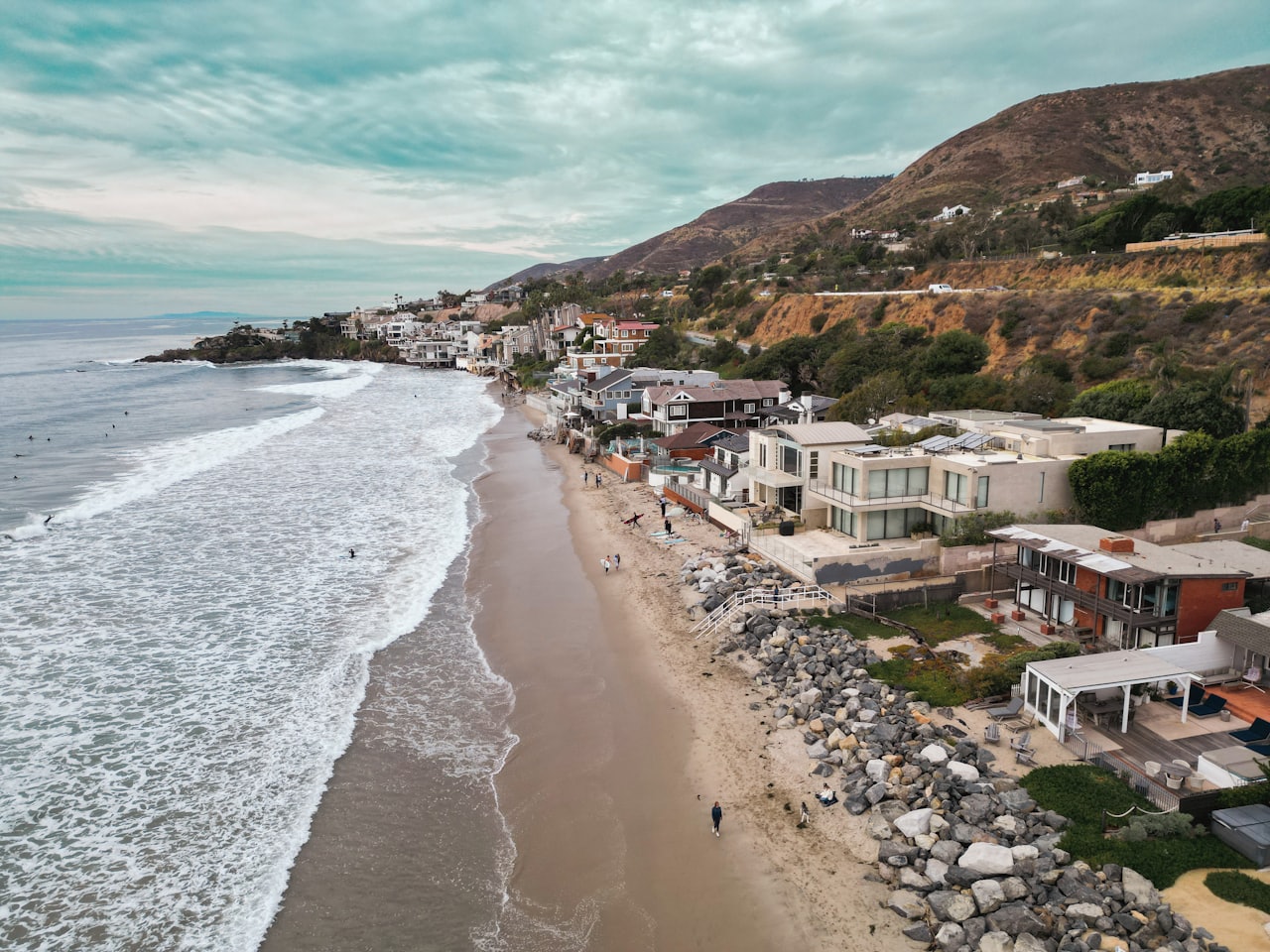
The Pacific Coast Highway runs along cliffs and beaches here; Malibu Pier and the sea stacks and caves of El Matador State Beach are the most photogenic stretches.

Guide’s notes

There is a story in this road’s long contest with wildfire and landslide — every few years a section is washed out or burned and rebuilt. Driving a road that could vanish at any time is a fitting image of California’s relationship with nature.

Photo spot: El Matador’s sea stacks and surf (backlit at sunset); the highway curves from above; Malibu Pier.

Long Beach & Queen Mary
Long Beach, CAcoastalAbout 2.5 hours

Long Beach & Queen Mary

Year-round

The retired British ocean liner Queen Mary is permanently berthed here, open to visit and serving as a hotel. Long Beach is one of America’s busiest container ports, and the Aquarium of the Pacific is in the same district.

Guide’s notes

The Queen Mary has lived three lives in one exhibit: during the Second World War the luxury liner was converted into a troopship carrying tens of thousands of soldiers at a time, fast enough to outrun submarines; today she serves as a hotel — luxury liner, troopship, hotel, three eras in a single ship.

Photo spot: The whole liner from the shore (wide angle); the deck and funnels; the port cranes on the skyline.

San Diego (Old Town & Bay)
San Diego, CAhistoricFull day (about 8 hours)

San Diego (Old Town & Bay)

Year-round

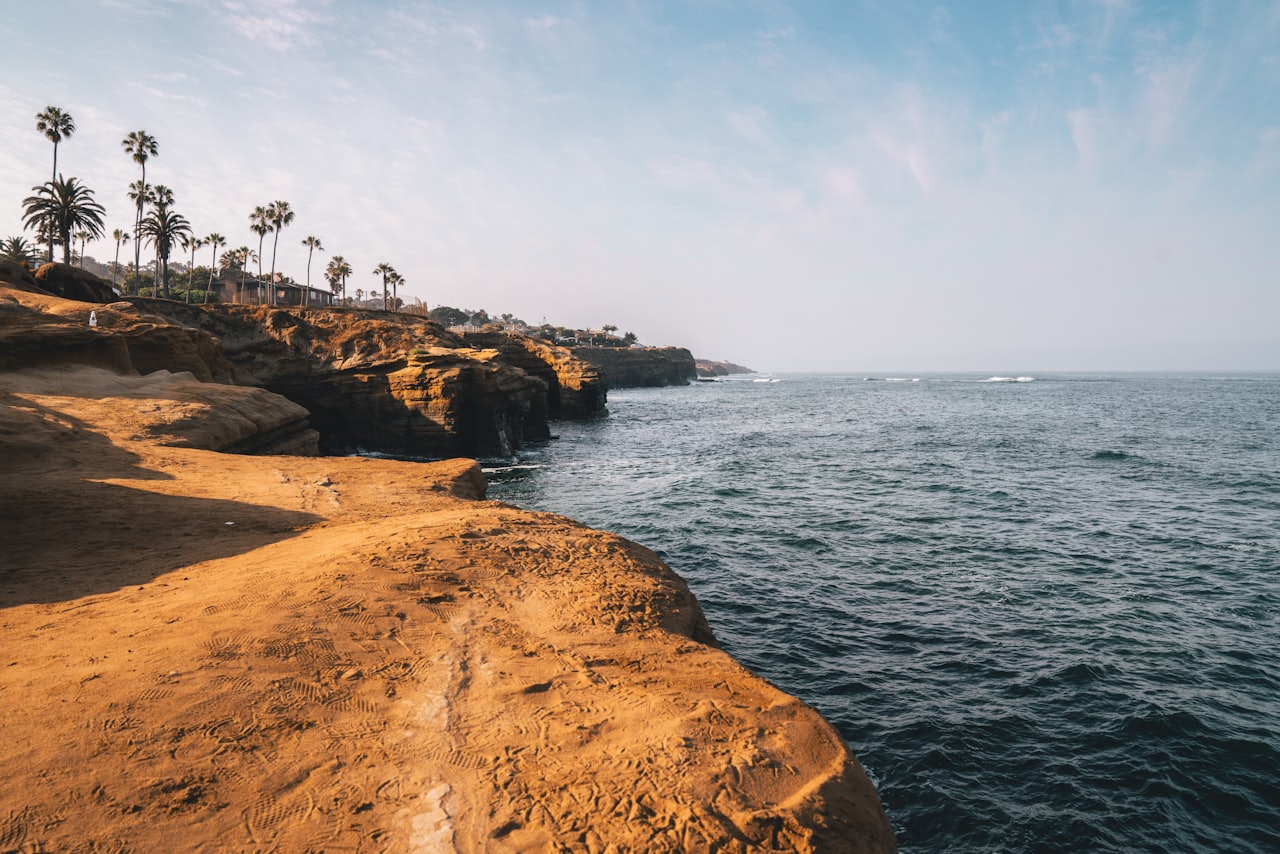
The site of California’s earliest Spanish settlement. Old Town State Historic Park recreates the streets of the Mexican era, while Balboa Park’s Spanish Colonial Revival complex gathers more than a dozen museums and a famous zoo.

Guide’s notes

San Diego is where California’s Spanish prehistory can be told in full — from the mission system to the Mexican era to the handover after the Mexican–American War. Read alongside LA’s Olvera Street, it makes clear that California did not simply appear as the American West.

Photo spot: Balboa Park’s bell tower and arcades; the Old Town’s colourful market; the Coronado Bridge and the bay.

Santa Barbara
Santa Barbara, CAcoastalAbout 3 hours

Santa Barbara

Year-round

A seaside town known as the “American Riviera”, built throughout in a single Spanish Colonial Revival style — white walls, red tiles and arcaded streets. The county courthouse bell tower can be climbed for views over the town and coast, and the old mission is well preserved.

Guide’s notes

The city’s uniform look was not an accident: after a 1925 earthquake destroyed the centre, the town chose to rebuild entirely in Spanish style and passed laws to enforce it — a disaster turned into the chance to redesign a whole city, and a classic case in the history of urban planning.

Photo spot: From the courthouse bell tower over red-tile roofs and the Pacific; State Street’s arcades; the mission’s twin towers.

Hearst Castle
San Simeon, CAhistoricAbout 3 hours

Hearst Castle

Year-round

A hilltop estate built by the newspaper magnate William Randolph Hearst and designed by architect Julia Morgan, blending European architectural elements and artworks from many periods, with famously lavish indoor and outdoor pools.

Guide’s notes

Two threads make this estate memorable: its architect, Julia Morgan, was California’s first licensed woman architect and led this vast project for decades; and Hearst himself was the model for the lead character of the film Citizen Kane — a film he tried hard to suppress. Fact and fiction knot together on this hilltop.

Photo spot: The outdoor Neptune Pool (the classic shot); the Roman indoor pool’s gold mosaic; the Pacific from the hilltop.

Big Sur & Bixby Creek Bridge
Big Sur, CAnatureHalf day (about 4 hours)

Big Sur & Bixby Creek Bridge

Apr–Oct

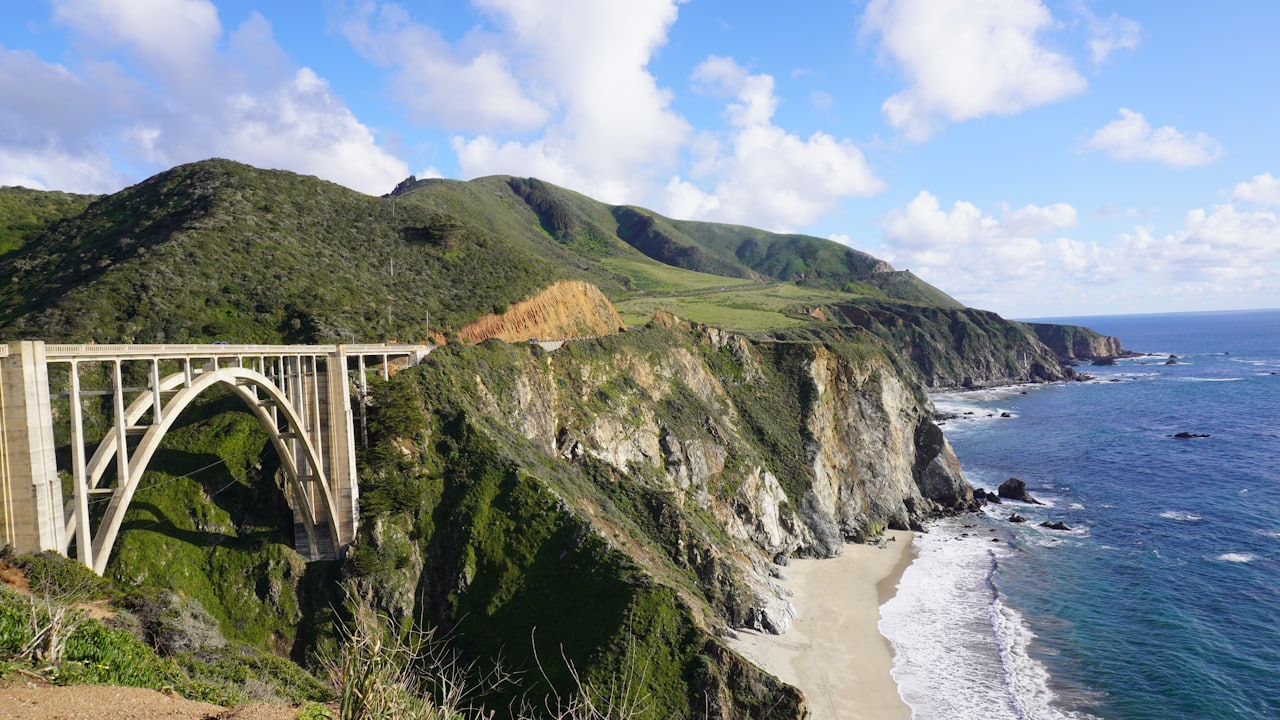
The most spectacular stretch of Highway 1: cliffs falling straight to the Pacific, with the Bixby arch bridge spanning a canyon — the most famous image of the California coast. McWay Falls drops directly onto the beach.

Guide’s notes

Geology and engineering meet here: this coast was lifted by the San Andreas fault system, and the highway itself was built during the Depression by convict labour and relief crews, only to be cut again and again by landslides. The most beautiful road is also the most fragile.

Photo spot: The viewpoint north of Bixby Bridge; McWay Falls from above; the cliffside highway curves.

Monterey & 17-Mile Drive
Monterey / Pebble Beach, CAcoastalHalf day (about 4 hours)

Monterey & 17-Mile Drive

Year-round

The Monterey Bay Aquarium is renowned for its displays of local marine life; 17-Mile Drive is a tolled scenic road through the private community of Pebble Beach, passing the Lone Cypress and a coastline of golf courses.

Guide’s notes

One note to remember: the Lone Cypress is a trademarked image — you’re welcome to photograph it as a keepsake, but commercial use is restricted. Monterey was once the centre of the sardine-canning industry; after that industry collapsed it reinvented itself around tourism and ocean conservation — a former industrial district turned into a hub of marine education.

Photo spot: The Lone Cypress (personal keepsakes only); the coastal rocks and surf; the aquarium’s kelp-forest tank.

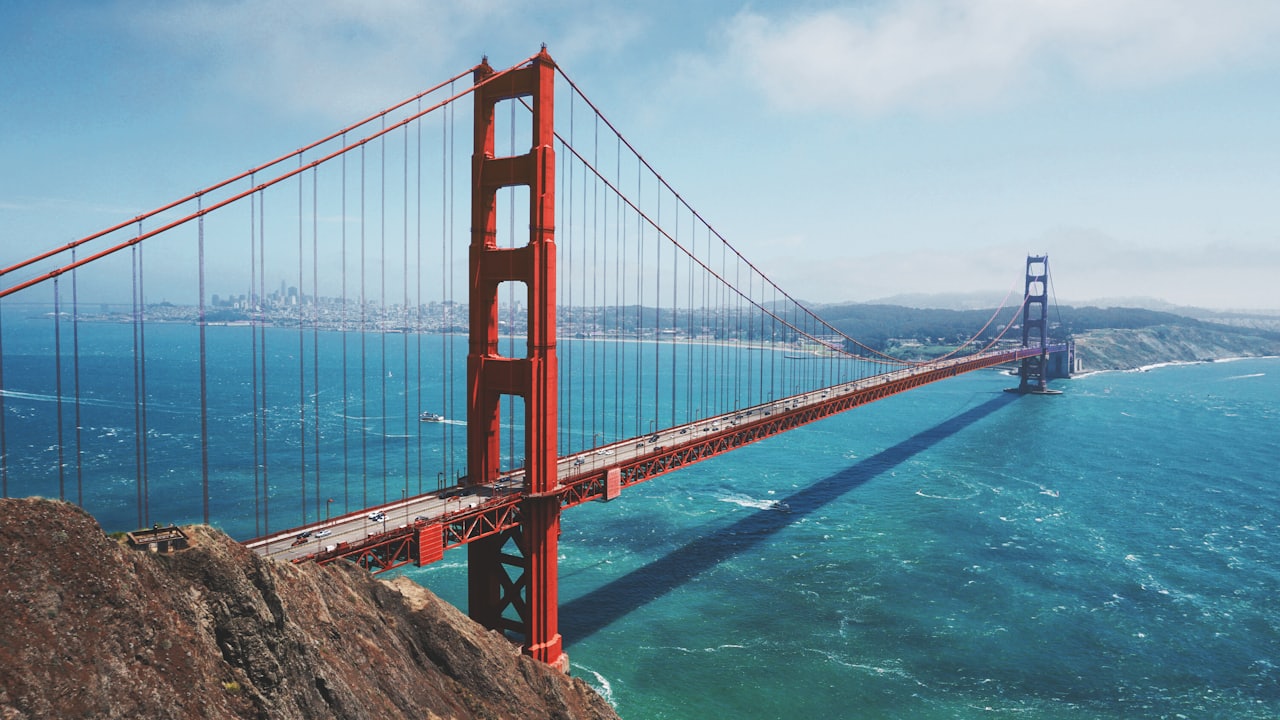
Golden Gate Bridge
San Francisco, CAlandmarkAbout 1 hour

Golden Gate Bridge

Year-round · clearer once the morning fog lifts

A suspension bridge completed in 1937, its International Orange paint especially striking in the fog. It can be viewed from the visitor area on the south side, the northern Vista Point, or the Battery Spencer overlook.

Guide’s notes

The colour is the best conversation piece: the Navy wanted black-and-yellow stripes for visibility, but the architect insisted on the rust-preventing orange-red, arguing it sat best against the headlands and the fog — a rare win for aesthetics over pure functionalism. Painting the bridge is a job that never ends.

Photo spot: Battery Spencer overlook (the classic shot); Fort Point looking up from beneath the bridge; the Crissy Field lawn in the distance.

Fisherman’s Wharf & Lombard Street
San Francisco, CAneighborhoodAbout 2.5 hours

Fisherman’s Wharf & Lombard Street

Year-round

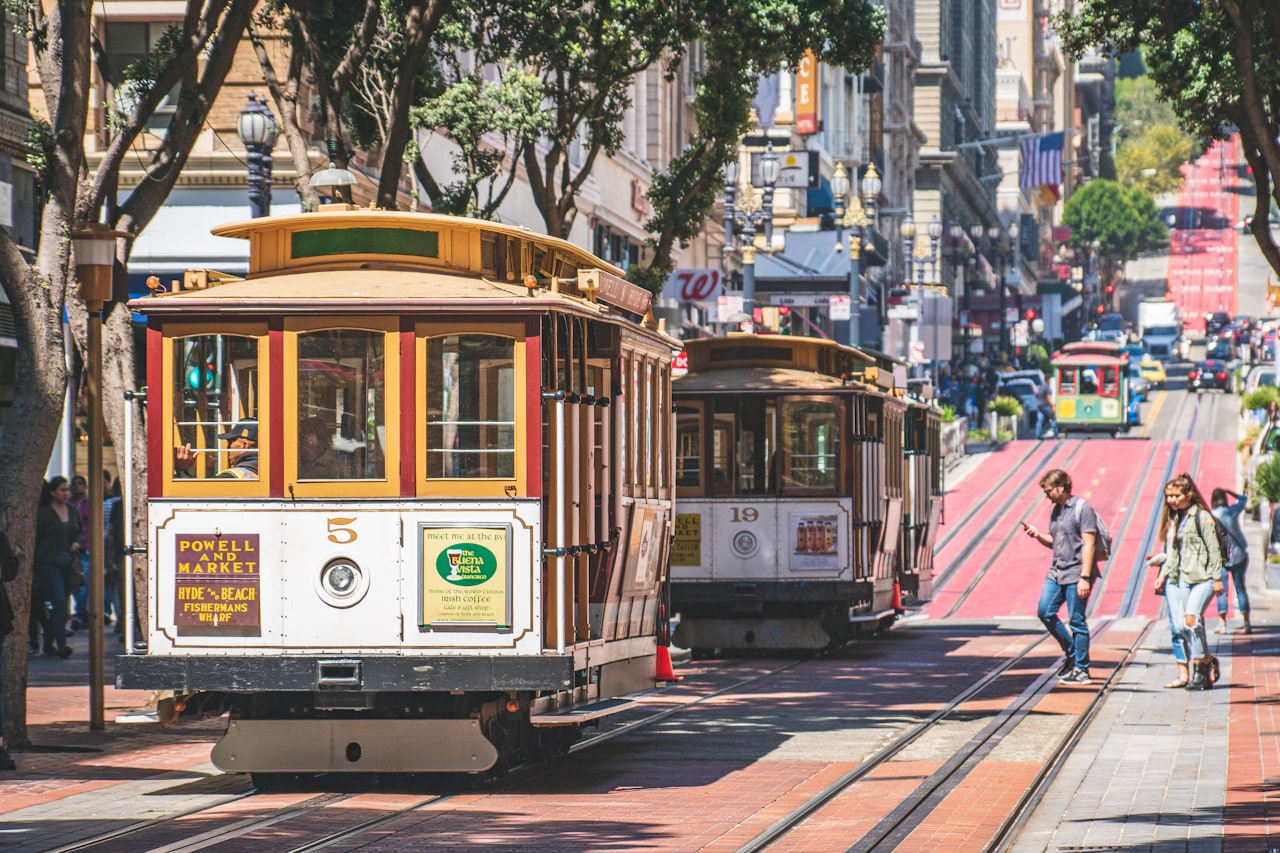
At Fisherman’s Wharf, the sea lions of Pier 39, the seafood stalls and sourdough make the standard circuit; Lombard Street is a steep block of eight sharp switchbacks framed by flower beds.

Guide’s notes

Lombard Street’s curves aren’t for looks: the slope was too steep for vehicles, so the switchbacks were added to ease the grade. The cable cars, likewise, were invented in the 19th century to spare horses the deadly climb — two inventions forced out of the terrain, and together they capture the city’s character.

Photo spot: Lombard Street’s full curve from the base; the cable car with the streetscape; the sea lions at Pier 39.

Stanford University
Stanford, CAcampusAbout 1.5 hours

Stanford University

Year-round

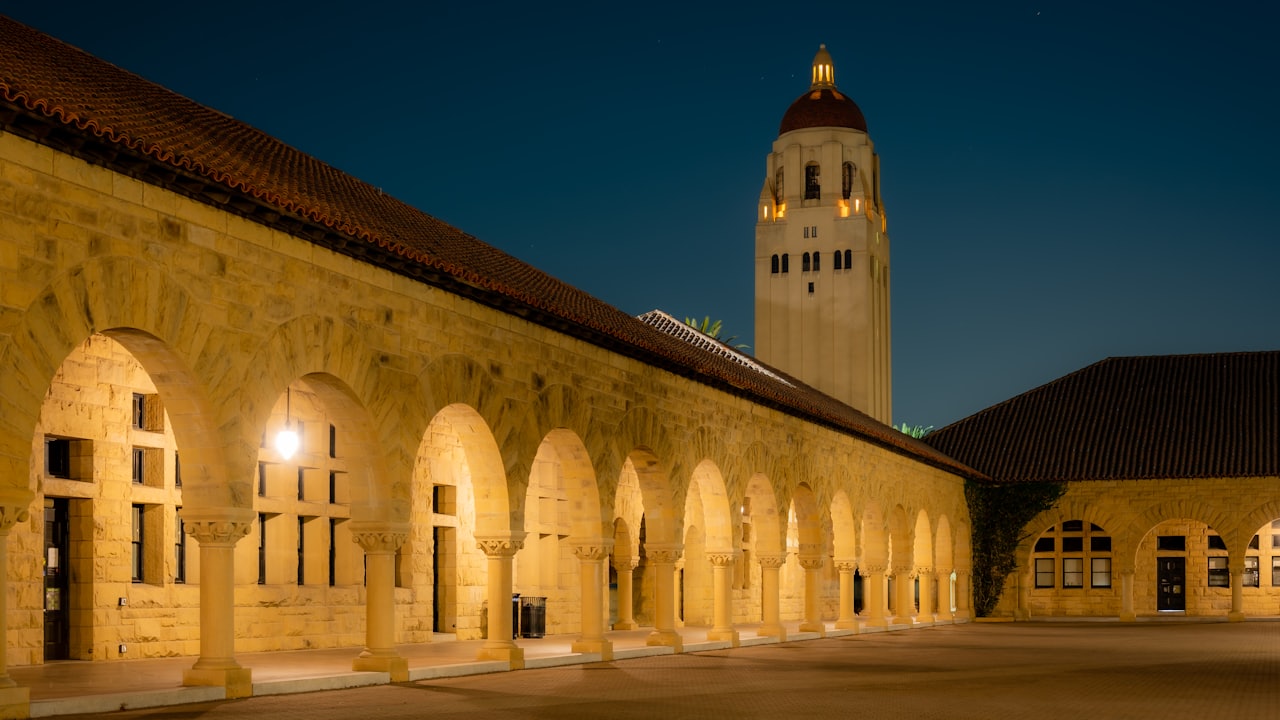
The campus centres on a Romanesque complex of sandstone arcades and red-tile roofs, with the Main Quad and Hoover Tower as its landmarks. Adjoining Silicon Valley, it is one of the wellsprings of tech-startup culture.

Guide’s notes

The founding story is a moving one: after the railroad magnate Leland Stanford and his wife lost their only son to illness in his teens, they resolved that “the children of California shall be our children” and gave over their farm to build a university, named in the boy’s memory. Seeing the campus after hearing this feels entirely different — and it sits right beside Silicon Valley.

Photo spot: The Main Quad’s arcade depth; Hoover Tower; Palm Drive leading to the gate.

Yosemite National Park
Yosemite, CAnatureFull day (about 10 hours)

Yosemite National Park

May–Oct · waterfalls fullest in May–Jun

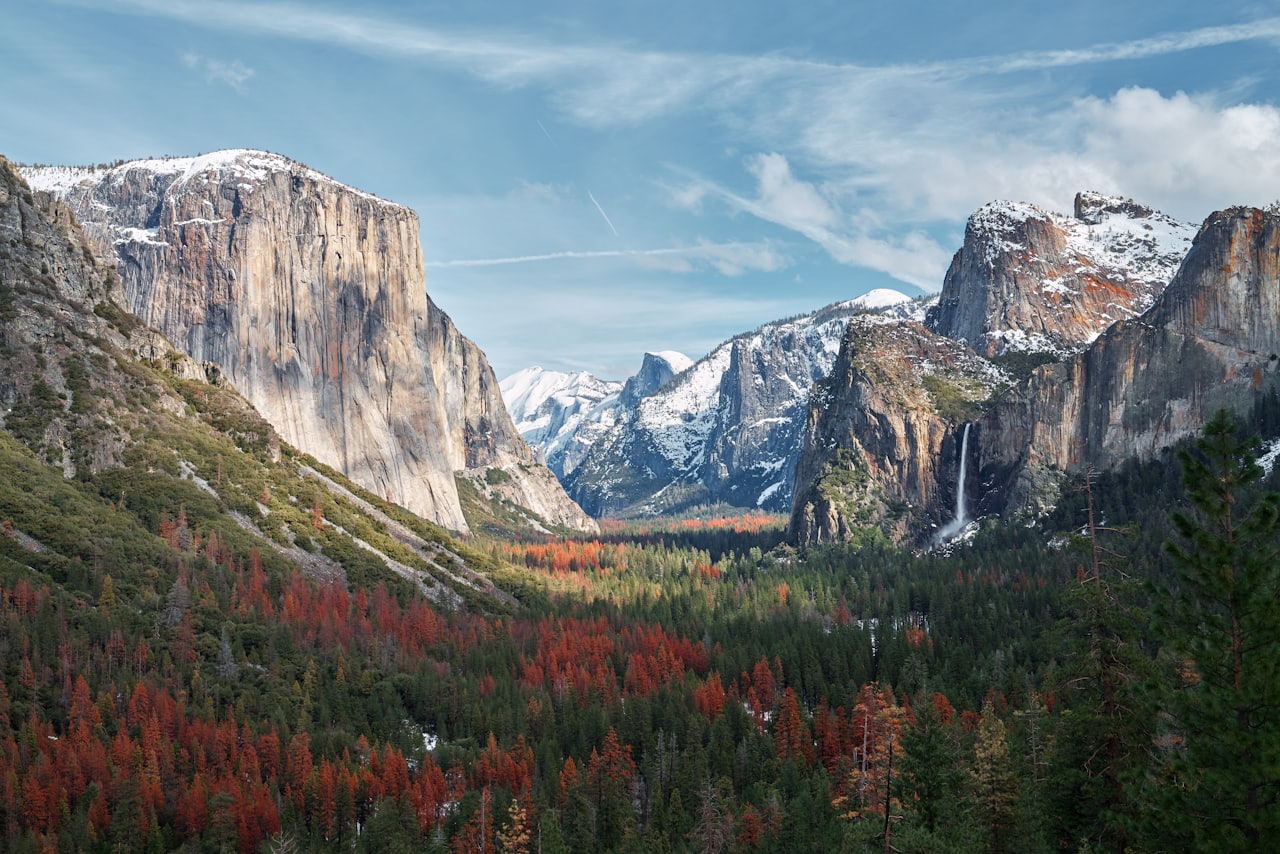
A glacier-carved valley of giant granite walls and waterfalls. El Capitan, Half Dome, Yosemite Falls and the Tunnel View overlook are its core sights.

Guide’s notes

This is where John Muir helped give the world the idea of the national park — the notion that wilderness is worth protecting for its own sake was first argued systematically here, and it reached presidents and Congress. It is one of America’s important gifts of an idea to the world. Do note that the waterfalls vary greatly by season.

Photo spot: Tunnel View (the classic panorama); the overlook from Glacier Point; looking up from the base of the falls.

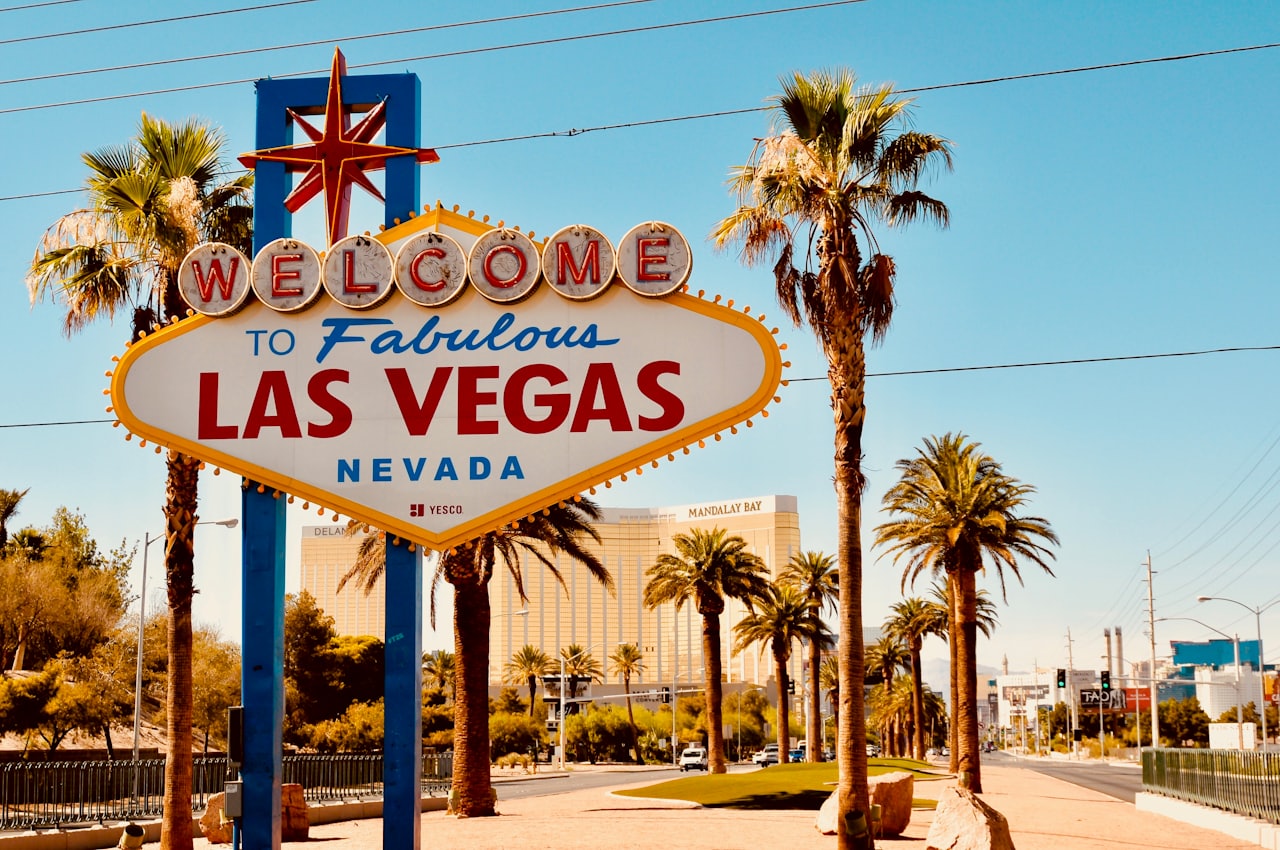
Las Vegas Strip
Las Vegas, NVlandmarkAbout 5 hours

Las Vegas Strip

Mar–May · Oct–Nov (summers are very hot)

A parade of themed hotels along the boulevard — dancing fountains, a volcano show, a replica Eiffel Tower and canals. The lights after dark are the essential experience.

Guide’s notes

The city itself is more interesting than any casino: built in the desert, watered and powered by a dam, and selling the world’s landmarks in replica, it is American themed consumption taken to its limit. Note that minors are not permitted in casino areas.

Photo spot: The fountain water show (at night); the Strip’s neon panorama; the themed atriums inside the hotels.

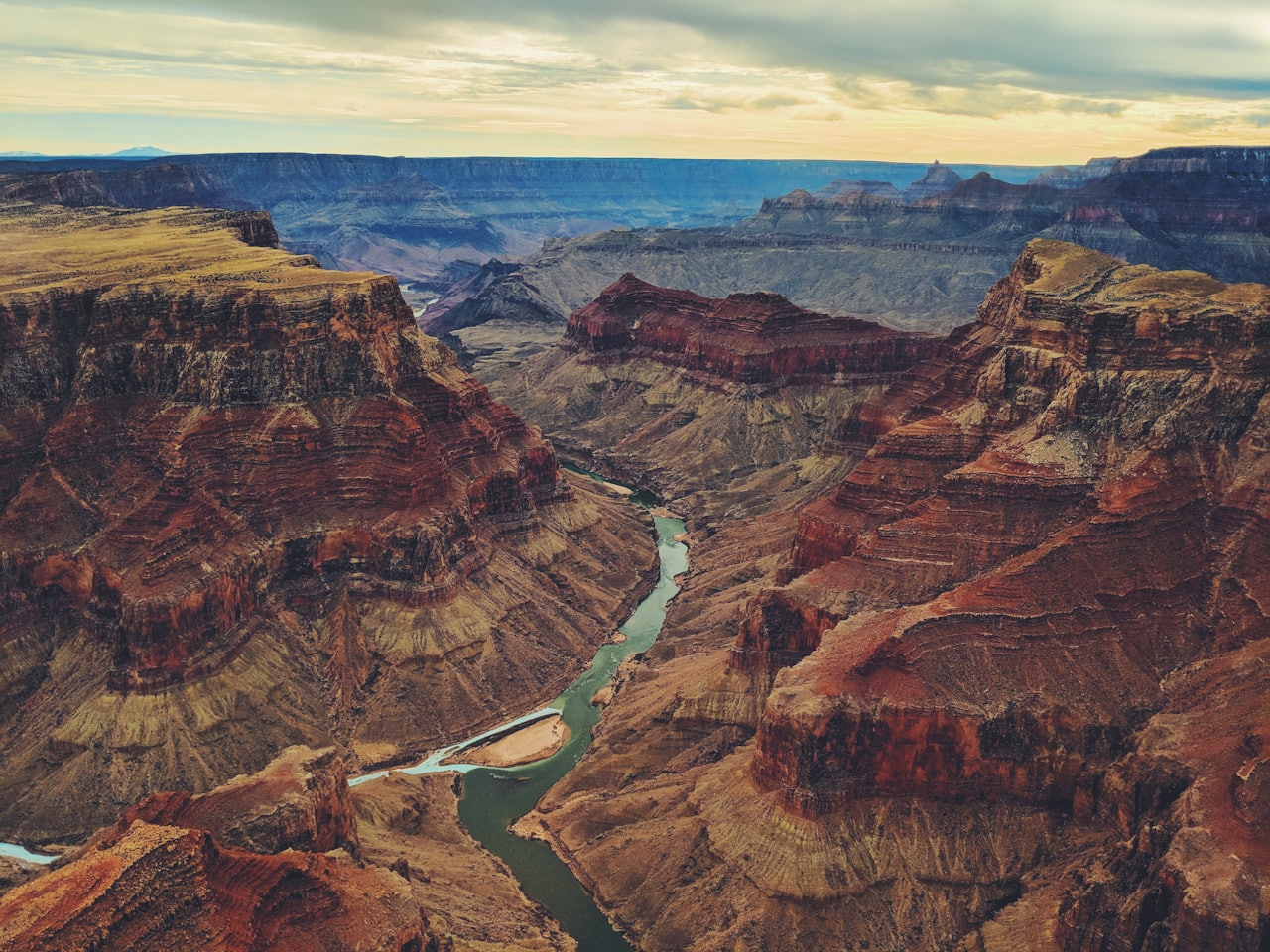
Grand Canyon National Park (South Rim / West Rim)
Grand Canyon, AZnatureFull day (about 8 hours)

Grand Canyon National Park (South Rim / West Rim)

Apr–Oct

A vast canyon cut by the Colorado River. The South Rim lies within the national park, with dense viewpoints and the most complete vistas; the West Rim sits on tribal land and is known for its glass skywalk — the two differ entirely in character and experience.

Guide’s notes

It is worth being clear about the difference between the rims. The South Rim lies within the national park, with the most complete views; the West Rim sits on tribal land and is known for its glass skywalk — the two are quite different in character, and any itinerary should state which rim it visits. In geological terms, the rock layers record around two billion years of Earth’s history — the most vivid “book of time” there is.

Photo spot: Mather Point / Yavapai Point (South Rim sunrise and sunset); the Desert View watchtower; the West Rim skywalk from outside.

Antelope Canyon & Horseshoe Bend
Page, AZnatureAbout 5 hours

Antelope Canyon & Horseshoe Bend

Apr–Sep · midday for the light beams

Antelope Canyon is a red-sandstone slot canyon on Navajo tribal land, where midday sun forms shafts of light; Horseshoe Bend is a horseshoe-shaped incised meander of the Colorado River, viewed from the clifftop.

Guide’s notes

The light beams form only under the right combination of season, time of day and weather, so they can’t be seen at will. The canyon lies on Navajo tribal land and can only be entered with a Navajo guide — which is itself a story about Indigenous sovereignty and the tourism economy.

Photo spot: Upper Antelope Canyon’s light beams (midday); Lower Antelope Canyon’s curved textures; the Horseshoe Bend panorama (wide angle, sunset).

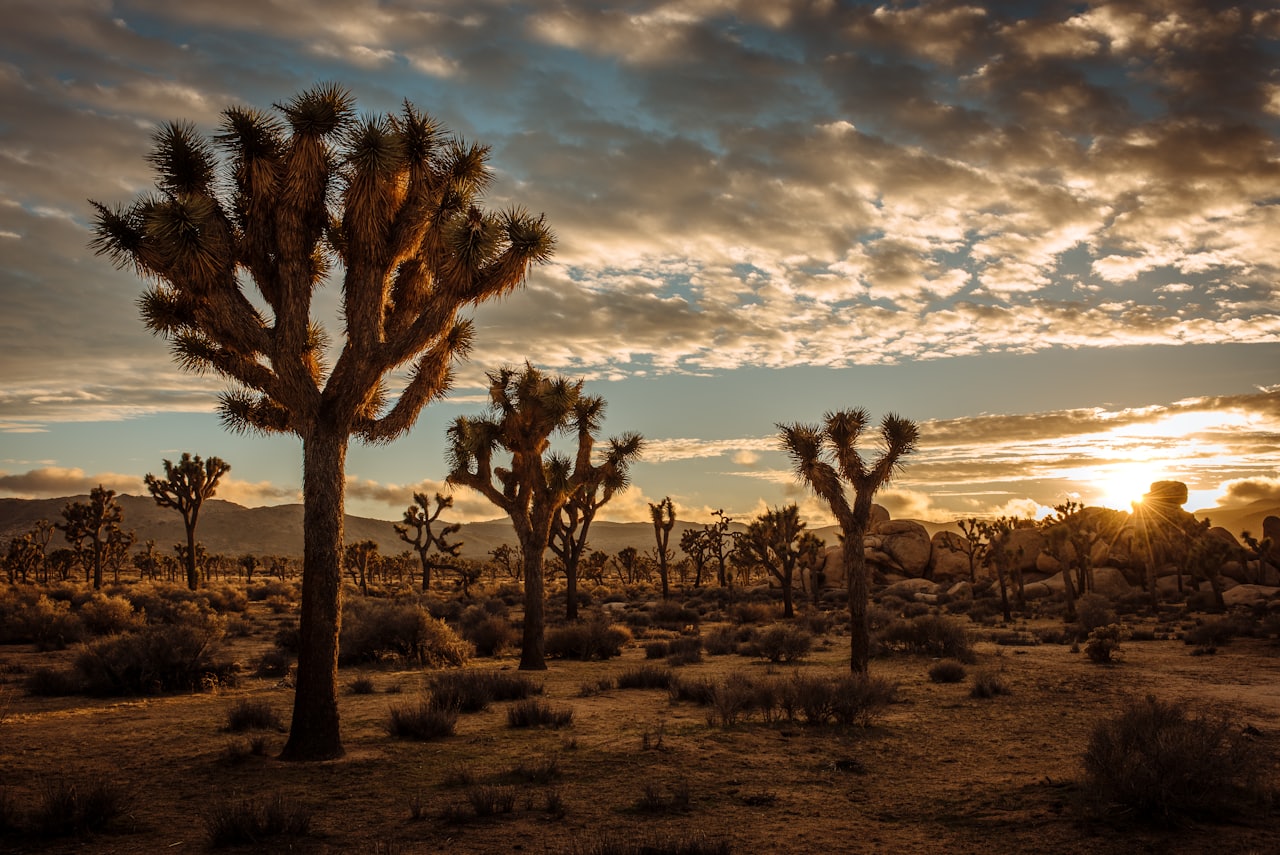
Joshua Tree National Park
Joshua Tree, CAnatureAbout 5 hours

Joshua Tree National Park

Oct–Apr (summers too hot)

Where the Mojave and Colorado deserts meet, stands of Joshua trees and giant granite piles form a surreal landscape. It is an internationally known dark-sky stargazing site.

Guide’s notes

The Joshua tree is actually a kind of yucca; early Mormon settlers thought it looked like Joshua raising his arms in prayer. It grows very slowly and lives very long, and climate change is now shrinking the range where it can thrive — a species that opens naturally onto questions of the environment.

Photo spot: Joshua tree silhouettes (sunset); Skull Rock; Keys View over the Coachella Valley; the night sky.

Palm Springs & Desert Hills Premium Outlets
Palm Springs / Cabazon, CAshoppingHalf day (about 4 hours)

Palm Springs & Desert Hills Premium Outlets

Oct–May

Palm Springs is known for its Mid-Century Modern architecture and desert-resort mood, with an aerial tramway rising to Mount San Jacinto. The nearby Desert Hills Premium Outlets is one of Southern California’s largest discount shopping areas.

Guide’s notes

Palm Springs’ signature is its Mid-Century Modern architecture — the holiday houses Hollywood figures built here, with glass walls and flat roofs opening straight onto the desert, an architectural expression of post-war American optimism. Visitors with an interest in design tend to love it.

Photo spot: The valley from the top of the aerial tramway; the Mid-Century Modern residential streets; the wind-turbine fields.

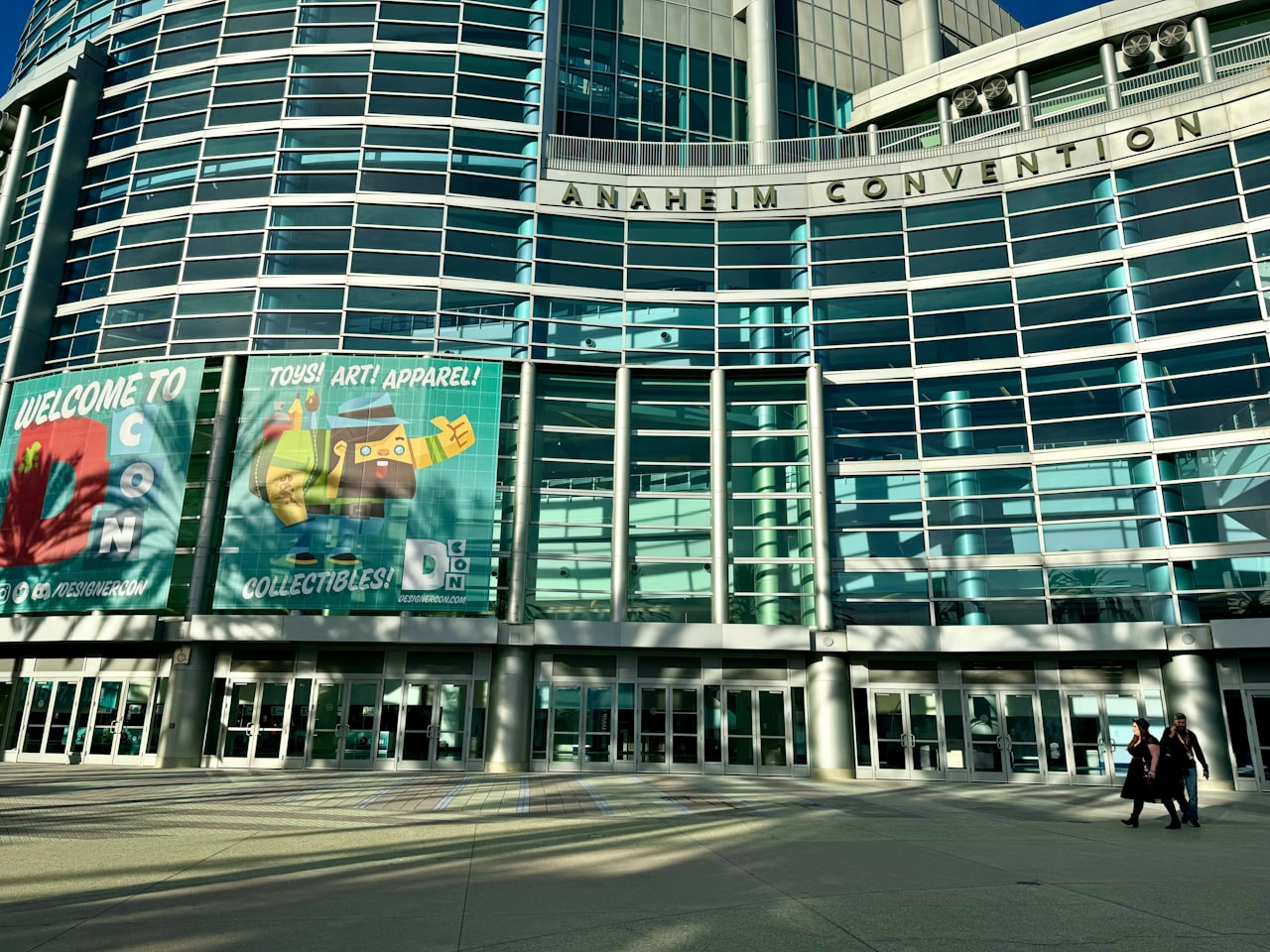
Los Angeles Convention Center
Los Angeles, CAvenue

Los Angeles Convention Center

Year-round

A major convention venue in downtown Los Angeles, beside the sports-and-entertainment district, with hotels and dining clustered around it. It is the operational hub for MICE group transfers, exhibitor vehicles and event logistics.

Los Angeles Major-Event Ground Services Zones
Los Angeles Metro, CAvenue

Los Angeles Major-Event Ground Services Zones

By event calendar

Ground-service planning for major-event periods across the greater Los Angeles area: airport transfers, hotel-to-activity-area shuttles, team vehicles, on-trip translation and logistics support.

Guide’s notes

During major-event periods our focus is entirely on ground services — airport transfers, hotel-to-activity-area shuttles, team vehicles and bilingual support. We provide no event tickets; admission should be arranged through the event’s own ticketing channels.

white lighthouse on a grassy hill by the sea

Have a group heading to the States?

Tell us the dates and the cities. We'll come back with a clear, itemised plan.

Start an enquiry