Skip to content
Long Voyage
a country road with a barn in the background

Destinations

New England

The campuses, coast and colonial history of New England.

45 places

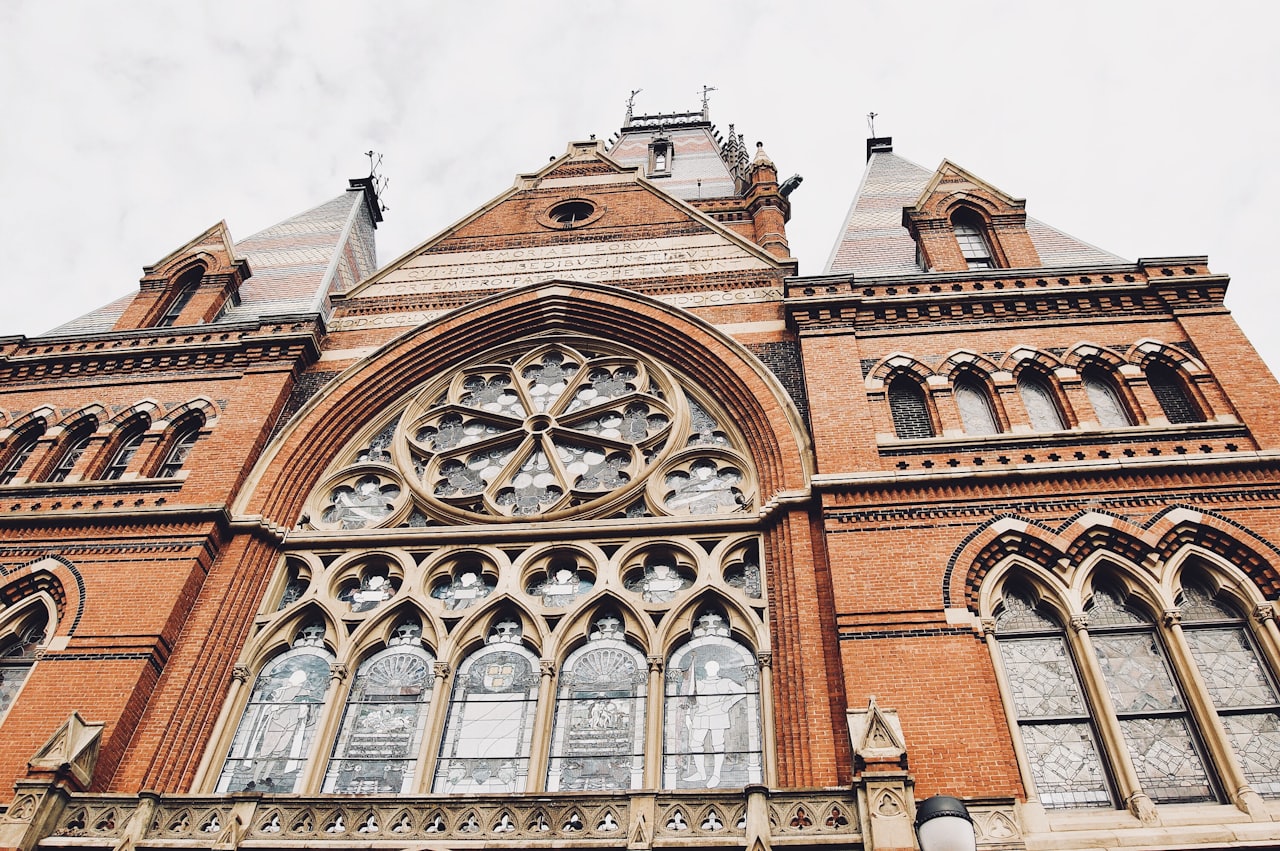
Harvard Yard, Harvard University
Cambridge, MAcampus~1 hr

Harvard Yard, Harvard University

Year-round · best foliage Sep–Oct

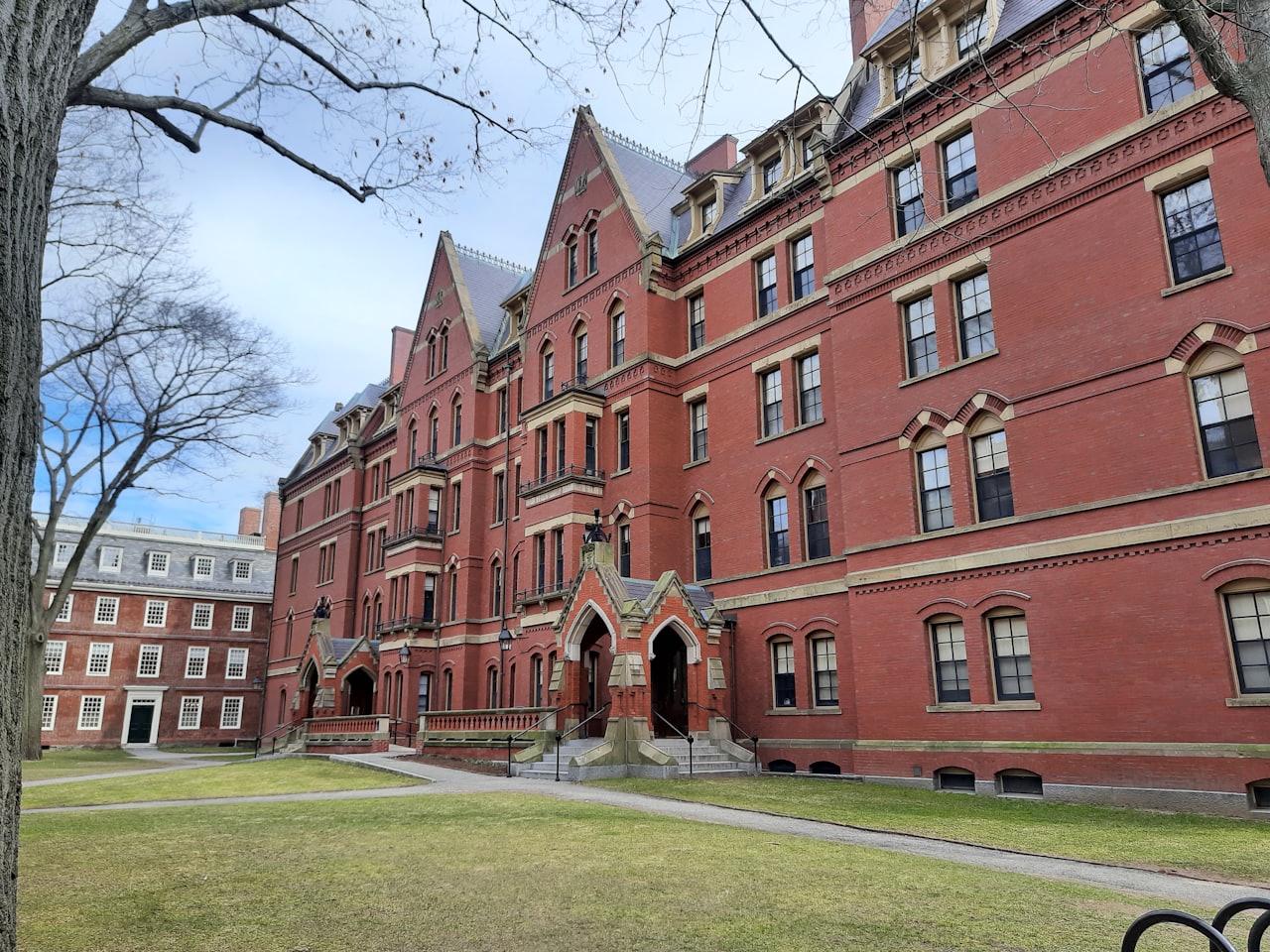
The historic core of America’s oldest university. Its quadrangle, enclosed by red-brick Colonial Revival buildings, became the prototype for the American college campus.

Guide’s notes

Three details around the John Harvard statue are often misreported: it is known as the “statue of three lies” — the figure is not a true likeness (no portrait survives, so a student modelled for it), John Harvard was not the founder but its first major benefactor (he gave his library and half his estate), and the 1638 on the base is not the founding year (the college dates to 1636). The idea that rubbing the statue’s toe secures admission is a tourist-era invention, not a campus tradition. The more moving story is the Widener Library, named for Titanic victim Harry Elkins Widener and endowed by his mother.

Photo spot: Looking back from just inside Johnston Gate; the front steps of Widener Library (wide angle); the white spire of Memorial Church set against the red brick.
Harvard Square
Cambridge, MAneighborhood~45 min

Harvard Square

Year-round

The city’s living room just outside the campus gates. A triangle of bookshops, cafés, street performers and the Red Line subway entrance, it is Boston’s most collegiate neighbourhood.

Guide’s notes

This is the best place to grasp the idea of a “college town”: the Boston metro area is home to dozens of institutions, and Harvard Square makes that density tangible. The former Out of Town News kiosk and the Brattle Theatre recall a time when, before the internet, this was New England’s clearing house for information.

Photo spot: The red-brick plaza at the subway entrance; the Coop’s windows; the street-performer area (ask before photographing).

Harvard Art Museums
Cambridge, MAmuseum~1.25 hrs

Harvard Art Museums

Year-round · ideal rainy-day option

Three museums under one roof (Fogg, Busch-Reisinger, Sackler), where Renzo Piano’s glass atrium gathers collections from three different eras beneath a single light well. The Forbes Pigment Collection in its conservation lab is one of a kind.

Guide’s notes

For art-minded guests, the highlight is the Forbes Pigment Collection — thousands of historic pigment samples used for authentication and restoration, a fine illustration of art history as a science. For general visitors, the atrium architecture itself is reward enough, without getting lost in individual works.

Photo spot: Looking up at the glass atrium (best under top light); the galleries on each level looking down into the atrium.

Harvard Museum of Natural History
Cambridge, MAmuseum~1 hr

Harvard Museum of Natural History

Year-round

Its treasure is the Glass Flowers — thousands of glass botanical models handcrafted by the Blaschkas, father and son, over half a century, and almost impossible to tell from real blooms with the naked eye. The museum also holds large animal skeletons and a mineral hall.

Guide’s notes

The Glass Flowers answer a “why make these at all” question: nineteenth-century botany teaching lacked specimens that lasted — wax models warped and dried specimens faded — so glass models were commissioned. It is a complete story of technology in the service of teaching, and it resonates especially with families and study groups.

Photo spot: The Glass Flowers cases (mind reflections; no flash); the large skeleton hall.

Massachusetts Institute of Technology (MIT)
Cambridge, MAcampus~1 hr

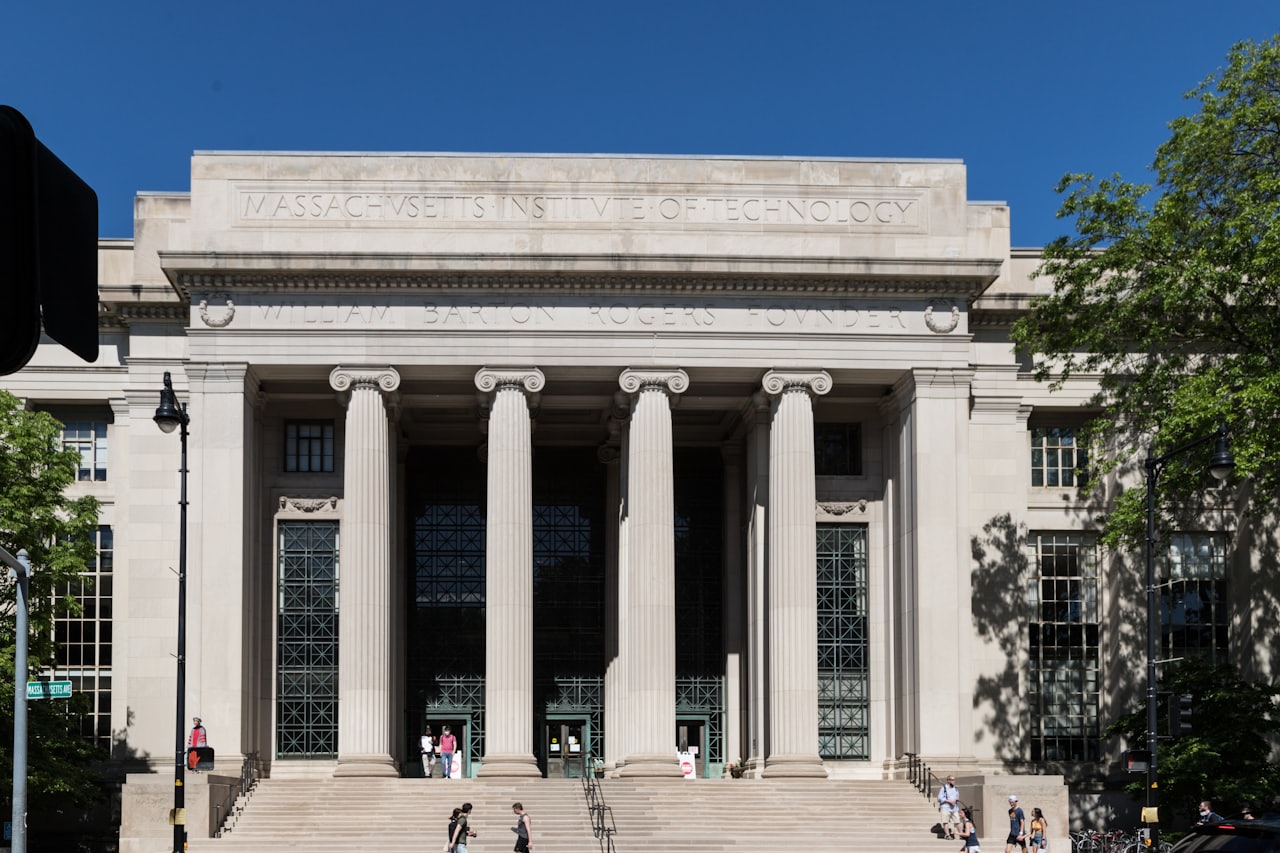
Massachusetts Institute of Technology (MIT)

Year-round

The lawn of Killian Court facing the Great Dome is MIT’s most recognisable view. The Infinite Corridor runs through the main buildings, and twice a year the sun aligns straight down it — the phenomenon known as “MIThenge”.

Guide’s notes

You can’t talk about MIT without its “hack” culture — students have famously placed a police car and a fire truck atop the Great Dome, pranks that combine engineering skill, humour and a self-imposed rule never to damage anything; they say more about the school’s character than any ranking. Set the classical symmetry of Killian Court beside Gehry’s tilting Stata Center and you see two eras of the same institution side by side.

Photo spot: Killian Court facing the Great Dome (the classic group-photo spot); the tilting façade of the Stata Center; the deep perspective of the Infinite Corridor.

MIT Museum
Cambridge, MAmuseum~1 hr

MIT Museum

Year-round

Now in its new home at Kendall Square. Robotics, artificial intelligence, holography and the history of science sit side by side, making it a centrepiece for science-and-engineering study groups.

Guide’s notes

This is the place to turn “seeing the campus” into “understanding what the school actually does”. Study groups can come with a task — for instance, find three world-changing MIT inventions and explain how each works — turning sightseeing into learning.

Photo spot: The robotics gallery; the holography hall.

Freedom Trail
Boston, MAhistoric~2.5 hrs

Freedom Trail

Apr–Nov

A red-brick path of about 4 kilometres (2.5 miles) linking 16 sites of the American Revolution, running from Boston Common all the way to Bunker Hill in Charlestown. The continuous brick line set into the pavement is itself one of the most successful pieces of urban wayfinding in the country.

Guide’s notes

Walking the whole trail is long for most guests, so it is usually taken in sections: the downtown stretch (Boston Common → the State House → the Old State House → Faneuil Hall) runs about 60–75 minutes and is the essence of it. One narrative thread carries the walk — how a body of the King’s own subjects moved, step by step, toward breaking with him — from the Stamp Act and the Boston Massacre to the Tea Party and the shots at Lexington, a timeline told through places rather than spread evenly across all 16 stops.

Photo spot: The Old State House framed against modern towers — the classic old-meets-new composition; a close-up of the brick line in the pavement; the golden dome of the State House.

Boston Common
Boston, MAlandmark~30 min

Boston Common

Year-round

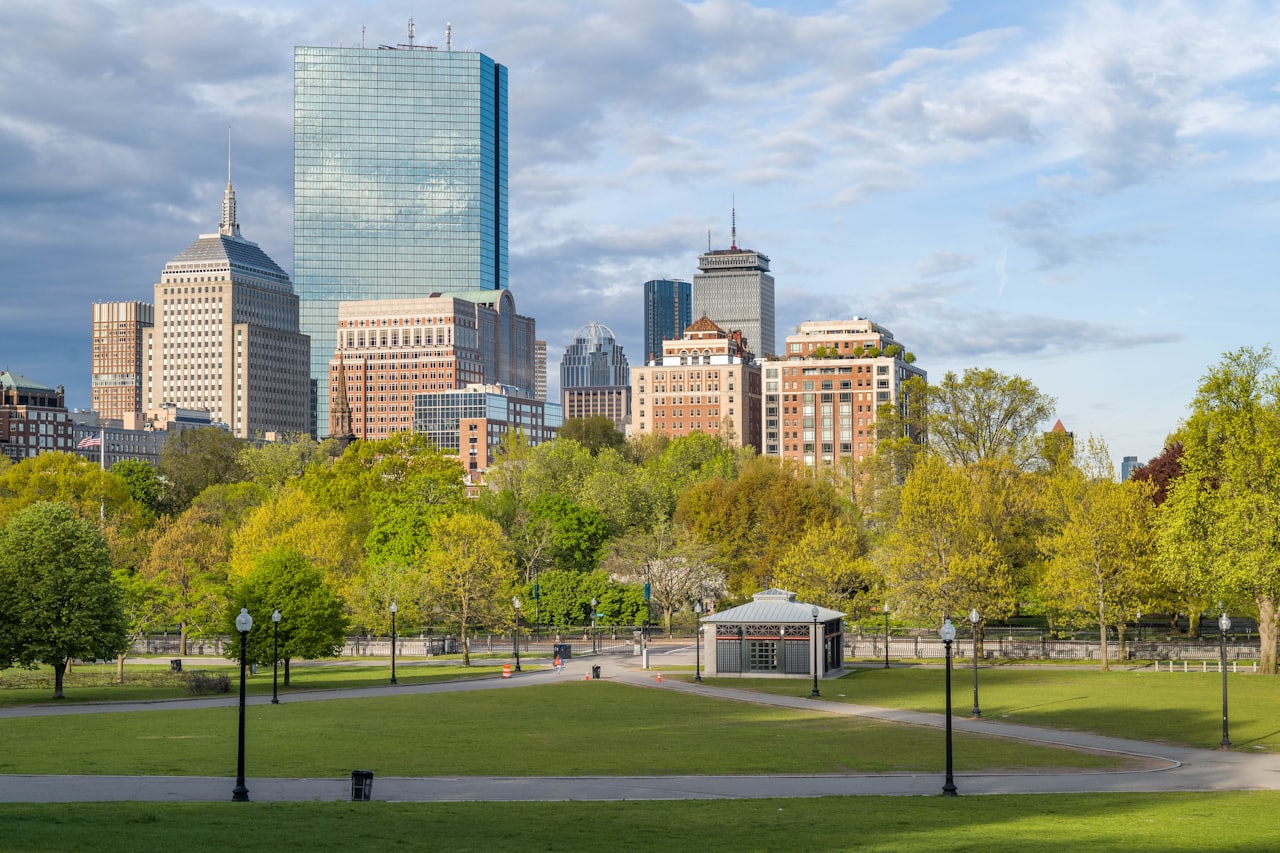
Dating to 1634, it is considered the oldest city park in America. It began as a common pasture and militia training ground, and later became a place for gatherings and speeches.

Guide’s notes

“Common” originally meant common land — pasture shared by all the townspeople. The word is a living fossil of New England self-government: a piece of land belonging to “all of us”, whose use is decided in meeting. It is the best way into the New England town-meeting tradition.

Photo spot: The State House’s golden dome seen from the park; the Frog Pond skating rink in winter.

Boston Public Garden & Swan Boats
Boston, MAlandmark~40 min

Boston Public Garden & Swan Boats

Apr–Oct (swan boats seasonal)

America’s first public botanical garden, laid out in Victorian style, its central lagoon crossed by pedal-powered swan boats that have run since 1877 under five generations of the same family.

Guide’s notes

The swan boats tell a good story: the design was inspired by the swan-riding knight in Wagner’s opera Lohengrin, and one family has run them for nearly a century and a half. The Make Way for Ducklings bronzes by the water come from a picture book available in Chinese translation, which resonates strongly with families.

Photo spot: The swan boats from the little bridge; the duckling bronzes (low angle); the tulip beds in season (Apr–May).

Massachusetts State House
Boston, MAlandmark~30 min

Massachusetts State House

Year-round

Designed by Charles Bulfinch and opened in 1798. Its landmark dome was first shingled in wood, then sheathed in copper (worked by Paul Revere’s foundry), and finally covered in gold leaf.

Guide’s notes

The dome’s three makeovers are a miniature of American history: wood, then copper, then gold — from colonial craft to industrial capacity to a symbol of wealth; painted black during the Second World War against air raids, it draws that era in too. Here Paul Revere shifts from “midnight rider” to industrialist, echoing his house in the North End.

Photo spot: Looking up at the dome from the front steps; a distant view from Boston Common.

Beacon Hill & Acorn Street
Boston, MAneighborhood~40 min

Beacon Hill & Acorn Street

Year-round · most photogenic during the Christmas decorations

Gas lamps, cobblestone paving and Federal-style red-brick row houses. Acorn Street is called one of the most photographed streets in America — Boston’s most picture-postcard lane.

Guide’s notes

What’s worth telling here is why it has stayed unchanged — historic-district rules so strict they govern even window-frame colours and house numbers. There’s also the origin of the purple windowpanes: a nineteenth-century batch of imported glass, high in manganese, turned violet in the sun; once a flaw, it is now a mark of status.

Photo spot: The length of Acorn Street (best light and fewest people early morning); Louisburg Square; a gas-lamp close-up.

Faneuil Hall & Quincy Market
Boston, MAmarket~1.25 hrs

Faneuil Hall & Quincy Market

Year-round

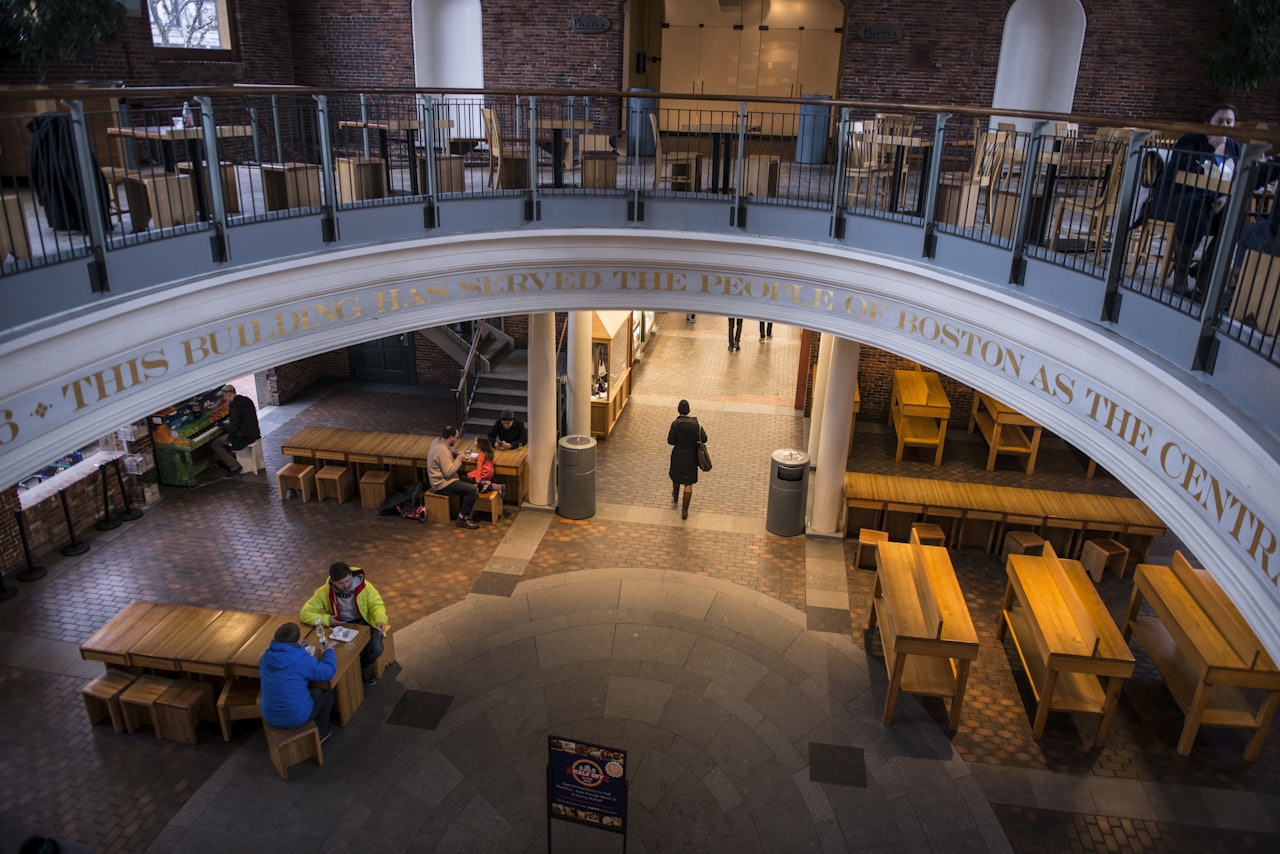
Faneuil Hall, called the “Cradle of Liberty”, was a hall for gatherings and speeches before the Revolution; next door, the central colonnade of Quincy Market is packed with food stalls from around the world — a natural place for guests to eat at their own pace.

Guide’s notes

The contrast is the point: on one side a political hall where independence was argued, on the other the most down-to-earth of food arcades — two faces of American public life. On the food front, the lobster roll, clam chowder and Boston cream pie are the local trio worth mentioning.

Photo spot: The dome of the market rotunda; the front of Faneuil Hall with its grasshopper weathervane; the outdoor performance area.

North End (Little Italy)
Boston, MAneighborhood~1 hr

North End (Little Italy)

Year-round · liveliest during summer street festivals

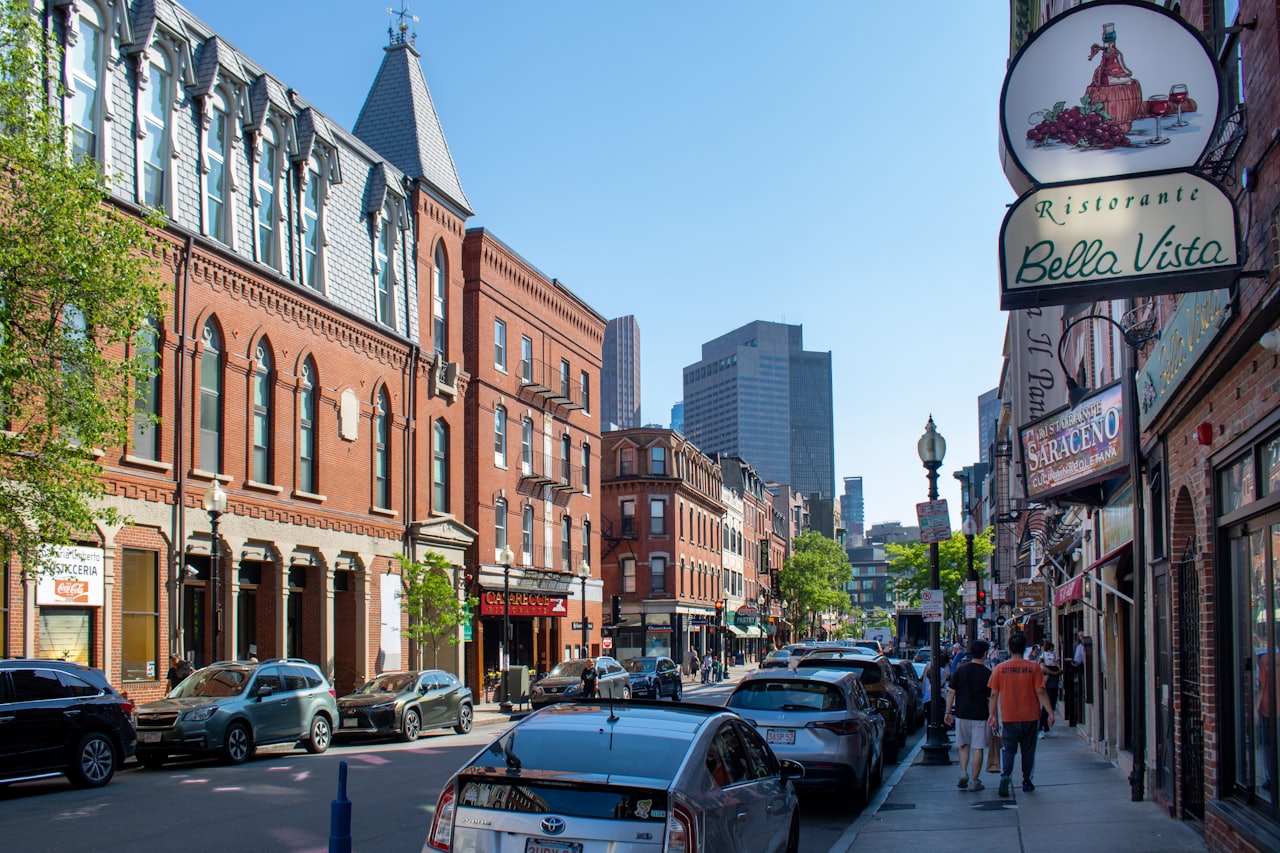
Boston’s oldest residential quarter, and from the late nineteenth century the heart of Italian immigrant life. Hanover Street is lined with Italian restaurants and pastry shops, the cannoli its signature sweet.

Guide’s notes

Immigration is the way in: the same few streets housed English Puritans, then Irish, then Jewish, then Italian residents in turn — the houses unchanged, the people replaced four times over. It goes far deeper than simply stopping for a pastry.

Photo spot: Hanover Street; the spire of the Old North Church seen from a side lane; pastry-shop windows.

Paul Revere House
Boston, MAhistoric~25 min

Paul Revere House

Year-round

Built in the late seventeenth century, it is the oldest surviving dwelling in downtown Boston. The silversmith, industrialist and revolutionary messenger Paul Revere once lived here.

Guide’s notes

Here you can clarify an image magnified by Longfellow’s poem: the “midnight ride” was not one man riding alone to success but a relay network of many, and Revere himself was intercepted along the way. Saying so is not debunking; it restores a lone hero to organised civic action, which is closer to how the Revolution actually worked.

Photo spot: The house seen from the courtyard.

Old North Church
Boston, MAhistoric~30 min

Old North Church

Year-round

Boston’s oldest surviving church building (1723). The signal-lantern story — “one if by land, two if by sea” — took place in its steeple.

Guide’s notes

The lanterns are not about romance but about how the speed of information can decide a war — in an age before the telegraph, two lamps sent a single binary signal across the river, the earliest of communication protocols. Guests with a technical bent respond especially well to this angle.

Photo spot: The white steeple (wide angle from across the street); the receding box pews inside.

USS Constitution
Charlestown, Boston, MAhistoric~1 hr

USS Constitution

Apr–Oct

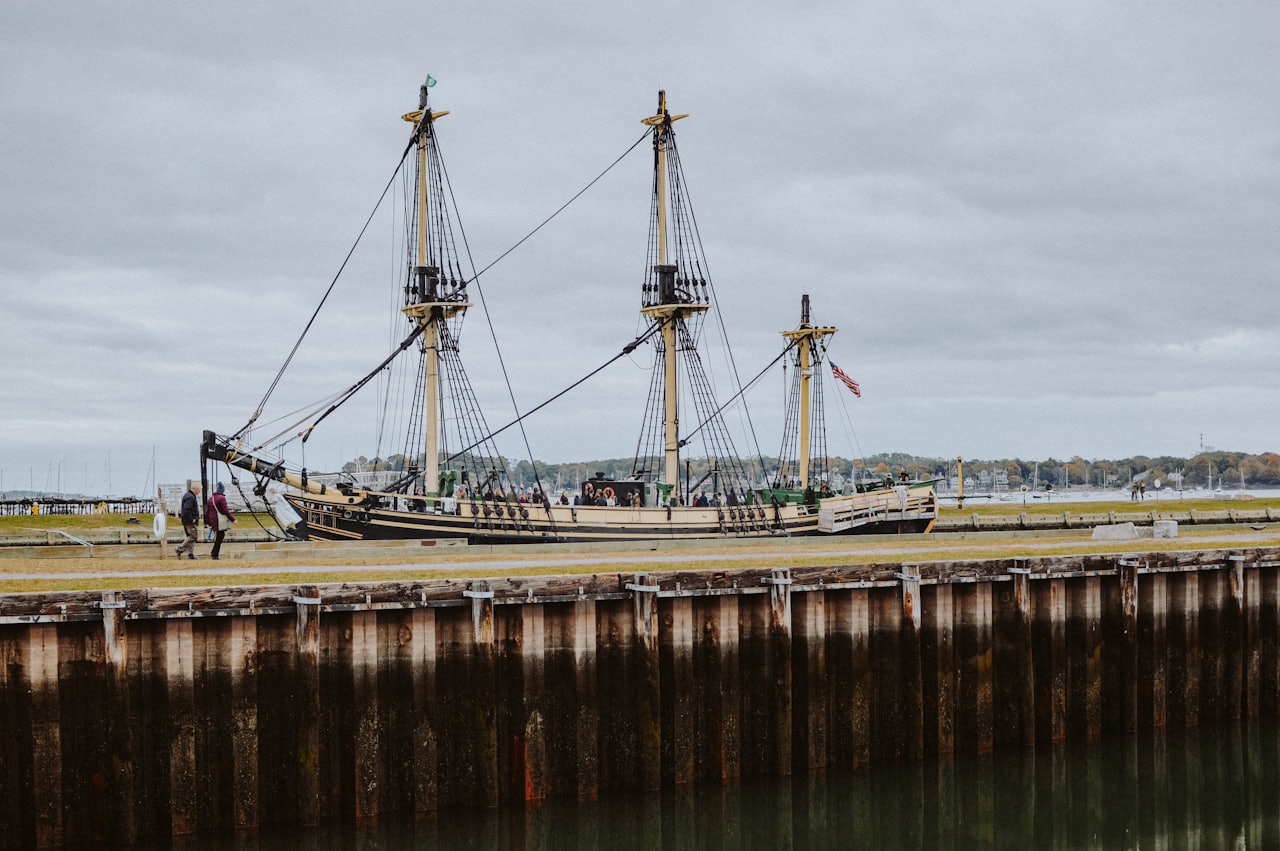
The oldest commissioned warship still afloat, launched in 1797. Its nickname, Old Ironsides, came from the War of 1812, when British cannonballs bounced off its oak hull.

Guide’s notes

The “ironsides” are in fact wood — the nickname comes from the unusually hard live oak of the hull, which makes the perfect opening line. It is still staffed by serving naval personnel, a living artefact quite unlike any warship on static display.

Photo spot: The ship from the dockside pier; looking up the masts; the gun positions on deck.

Bunker Hill Monument
Charlestown, Boston, MAhistoric~30 min

Bunker Hill Monument

Apr–Nov

A granite obelisk commemorating the 1775 Battle of Bunker Hill. It marks the end of the Freedom Trail.

Guide’s notes

The British took the ground but at heavy cost, and the colonial militia, though beaten, had proved it could stand up to a professional army — a lost battle that changed how both sides thought. In military history, these cases of tactical defeat and strategic success are the most rewarding to tell.

Photo spot: Looking up the full height from the base; the view from the top (if you climb).

Boston Tea Party Ships & Museum
Boston, MAmuseum~1.25 hrs

Boston Tea Party Ships & Museum

Year-round

An immersive, performance-led museum whose restored ships lie in the water near the original site, with visitors joining a re-enactment of throwing the tea chests overboard. Highly interactive, it is one of the most engaging paid experiences for groups.

Guide’s notes

Beyond the re-enactment, the real background matters: the protest targeted the monopoly created by the Tea Act and the principle of “no taxation without representation”, not simply anger at high taxes — the Act in fact made tea cheaper. Make that counter-intuitive point clear and guests remember it for a long time.

Photo spot: The deck of the restored ship; the moment the tea chest is thrown; the ship framed against the modern skyline.

New England Aquarium
Boston, MAmuseum~1.5 hrs

New England Aquarium

Year-round · a family favourite

At its heart is a four-storey Giant Ocean Tank recreating a Caribbean coral reef, wrapped by a spiral ramp that lets you watch a single ecosystem from every height. The penguin exhibit and touch tanks are favourites with children.

Guide’s notes

The tank’s design idea is worth a word: rather than boxing animals into cages, it has you spiral upward around a whole ecosystem, echoing a diver’s descent. For families, a small task such as “find three symbiotic relationships” works well.

Photo spot: The Giant Ocean Tank from each level; the penguin exhibit; the harbour boardwalk outside.

Museum of Fine Arts, Boston (MFA)
Boston, MAmuseum~2 hrs

Museum of Fine Arts, Boston (MFA)

Year-round · a top rainy-day choice

One of the finest encyclopaedic art museums in the United States. Its Egyptian, Greco-Roman and Impressionist holdings are all strong, and its Asian wing — Japanese and Chinese art in particular — is vast, a section that resonates deeply with Chinese guests.

Guide’s notes

For Chinese guests, the provenance and dispersal history of some of the Chinese objects here is an unavoidable subject. The sound approach is candour on all three counts — neither avoiding nor inflaming, stating provenance as recorded in the museum’s own published documentation, and setting the dispersal of cultural objects within the wider history of nineteenth- and twentieth-century global collecting rather than turning it into an emotional appeal. This is exactly where the professional parts from the amateur.

Photo spot: The Shapiro Family Courtyard; the Japanese garden (seasonal); the front steps.

Isabella Stewart Gardner Museum
Boston, MAmuseum~1.5 hrs

Isabella Stewart Gardner Museum

Year-round

A Venetian-palazzo building wraps a four-storey courtyard garden, its collection arranged entirely to the founder’s own will, her testament forbidding any piece to be moved. The 1990 theft remains unsolved, and the empty frames of the stolen paintings still hang in their original places.

Guide’s notes

The empty frames are the museum’s most powerful talking point: a legal clause forbidding any change to the display, layered onto an unsolved case, has created the most famous “negative space” in museum history. It needs no art-history background — any audience understands it and remembers it.

Photo spot: The courtyard garden from each level (natural light, best at midday).

Museum of Science, Boston
Boston, MAmuseum~2 hrs

Museum of Science, Boston

Year-round · ideal for families and study groups

Built across the Charles River, its signature is the lightning show staged with a giant Tesla coil. Halls on dinosaurs, space and the human body suit all ages, and there is an IMAX theatre and a planetarium.

Guide’s notes

The lightning show is high-value content for study groups: from static electricity to high-voltage discharge, the live demonstration is far more vivid than any video. It’s worth locking in as a fixed part of the day, with the other halls left to free exploration.

Photo spot: The lightning show (use a fast shutter); the building spanning the river; the dinosaur hall.

Fenway Park
Boston, MAvenue~1 hr

Fenway Park

Year-round (tours) · Apr–Sep (season)

Opened in 1912, it is the oldest ballpark still in use in Major League Baseball. The tall left-field wall, the “Green Monster”, is its emblem.

Guide’s notes

Here you can ask why Americans refuse to tear down this small, awkward ballpark — the Green Monster is tall and close because the plot was hemmed in by streets and had to be, and the flaw eventually became an identity. It is the best case for understanding how, in American sports culture, tradition outranks efficiency.

Photo spot: The Green Monster seats; the main stands; Yawkey Way outside the park.

Newbury Street
Boston, MAshopping~1.5 hrs

Newbury Street

Year-round

The main shopping street of Back Bay, its storefronts converted from Victorian brownstone row houses, running from luxury names to independent boutiques and cafés. It is Boston’s most stylish shopping street.

Guide’s notes

All of Back Bay is a planned new district built on nineteenth-century landfill, its streets named in alphabetical order (Arlington, Berkeley, Clarendon, Dartmouth…). Mention that one detail and guests can suddenly navigate on their own — it changes the whole experience.

Photo spot: The brownstone façades and shop signs; corner café tables; the street trees in autumn.

Boston Public Library (McKim Building)
Boston, MAlandmark~40 min

Boston Public Library (McKim Building)

Year-round · a good rainy-day option

The first large public library in America supported by public taxes and free to all. The older McKim building is Italian Renaissance Revival, and the barrel vault and green lamps of Bates Hall reading room make it one of the most photographed library interiors in the world.

Guide’s notes

Carved above the entrance are the words “FREE TO ALL” — and those four words are the heart of the whole visit. In the nineteenth century, a city building a palace-like library at public expense for everyone, the poor and immigrants included, was itself a revolutionary idea. For study groups and parents, this carries more weight than ticking off any famous campus.

Photo spot: The length of Bates Hall (the rows of green lamps); the courtyard cloister; the lions on the grand staircase.

Copley Square & Trinity Church
Boston, MAlandmark~40 min

Copley Square & Trinity Church

Year-round

Trinity Church, designed by H. H. Richardson, is a milestone of American architecture (Richardsonian Romanesque), and its façade reflected in the glass of the Hancock Tower opposite forms Boston’s classic dialogue between old and new.

Guide’s notes

The glass curtain wall is the focus: the modernist tower was at first seen as an intrusion on a historic square, yet in the end it made peace by taking the old church into its own reflection. Guests interested in architecture and photography both come away satisfied.

Photo spot: From the southwest corner of the square, the church with its reflection in the glass tower (best in the raking light of dusk).

Charles River Esplanade
Boston, MAnature~30 min

Charles River Esplanade

May–Oct

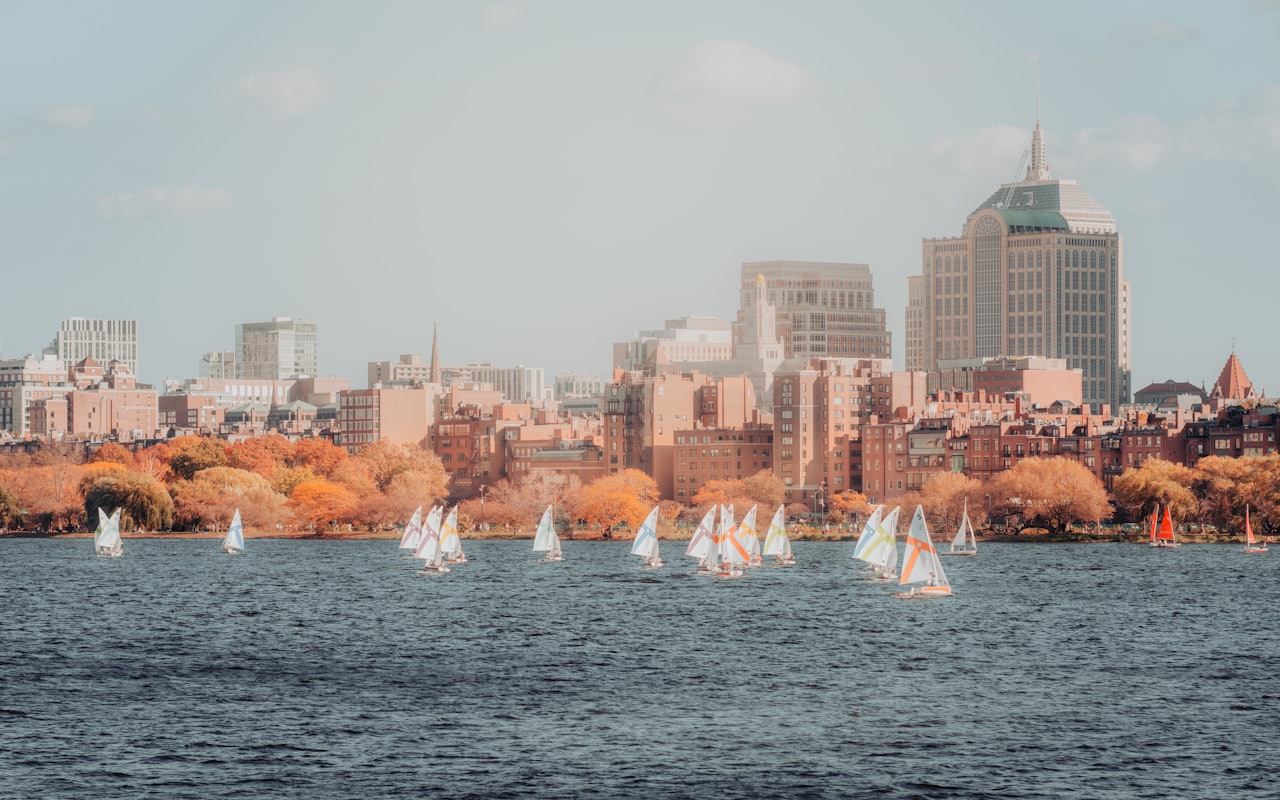
A ribbon of parkland along the Charles River, dotted with sailboats and looking across to the Cambridge and MIT skyline. The Hatch Shell amphitheatre hosts the Boston Pops in summer and the Independence Day fireworks.

Guide’s notes

This is the best spot to make “Boston is a college town” tangible — across a single river, the old city and financial district on the south bank, Harvard and MIT on the north; one view explains the whole structure of the city.

Photo spot: The Cambridge skyline from the riverbank (backlit at sunset); sailboats and bridges; the Hatch Shell.

Seaport District
Boston, MAneighborhood~1 hr

Seaport District

May–Oct

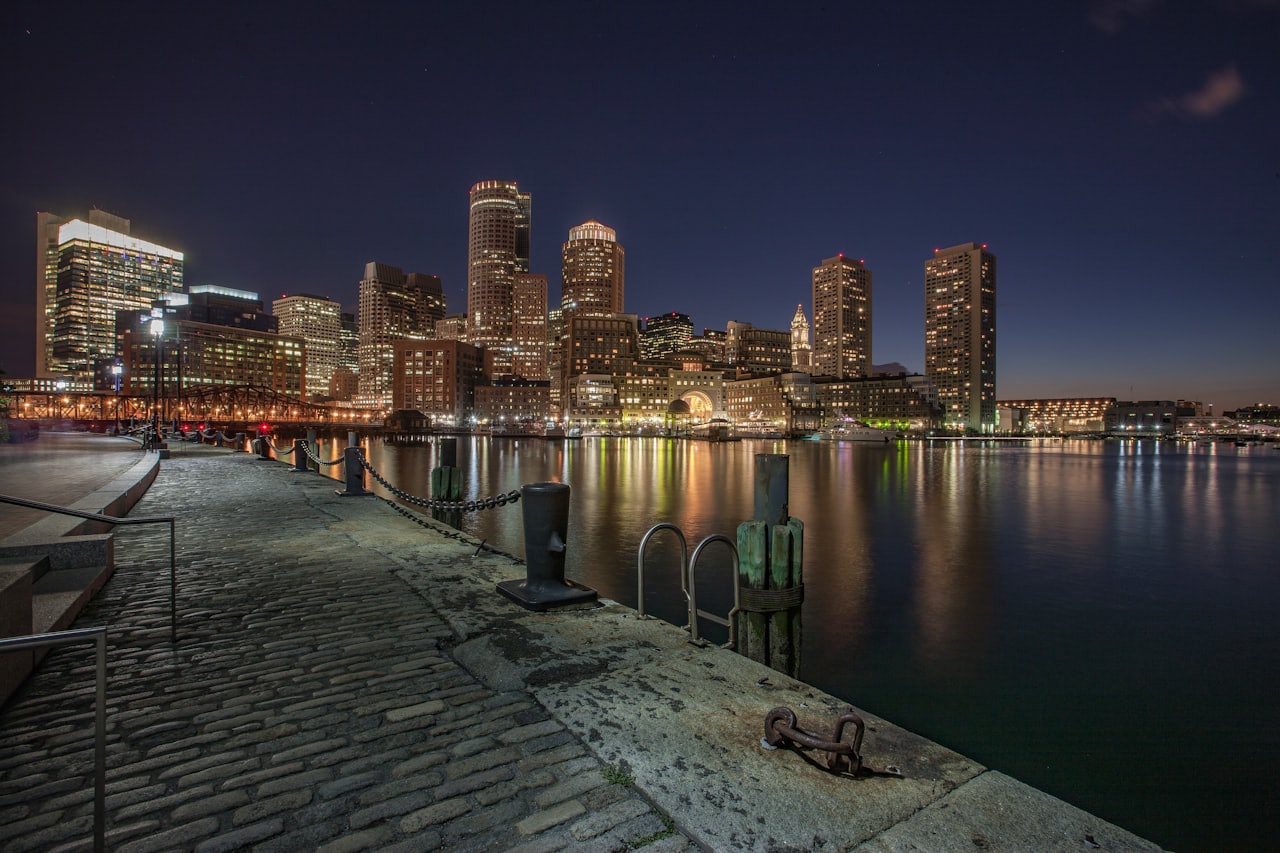
Boston’s largest new-development district of the past two decades, with glass office towers, the Institute of Contemporary Art (ICA), seafood restaurants and a waterfront promenade. The convention centre (BCEC) sits here, the main arena for MICE business.

Guide’s notes

It sets up a contrast on the timeline with the North End and Beacon Hill: three quarters standing for the Boston of the seventeenth-to-nineteenth centuries, the late nineteenth century and the twenty-first. Walk the sequence and guests move from ticking off sights to reading the city.

Photo spot: The cantilevered mass of the ICA; the downtown skyline from the promenade; the harbour marina.

Boston Harbor Cruise & Whale Watch
Boston, MAnature~4 hrs

Boston Harbor Cruise & Whale Watch

May–Oct (whale watch seasonal)

The inner-harbour cruise runs about 60–90 minutes with skyline views from the water; the whale watch usually takes 3–4 hours, heading out to the Stellwagen Bank sanctuary where humpback and minke whales are often seen.

Guide’s notes

Managing expectations up front is essential for the whale watch: this is wildlife viewing, sightings are never certain, the trip is long and the sea can be rough. Groups told the caveats in advance complain far less than those promised too much.

Photo spot: The skyline from the boat; a breaching whale (a telephoto lens and some luck required).

Wellesley College
Wellesley, MAcampus~1 hr

Wellesley College

Apr–Oct · best in autumn

A leading women’s liberal-arts college, its campus set around Lake Waban and among the most beautiful in New England. Chinese students including Soong Mei-ling and Bing Xin studied here, giving it a special meaning for Chinese guests.

Guide’s notes

This is a point of strong resonance for Chinese guests: it is worth explaining the women’s college as a distinctly American institution — why they persist even after co-education became the norm, and whom they have educated. Told alongside the history of their Chinese alumnae, it carries far more weight than the scenery alone. Here we keep to matters of public record and stay clear of anything to do with admissions.

Photo spot: The campus from the shore of Lake Waban; the Gothic tower; the tree-lined avenue in autumn colour.

Lexington & Concord / Minute Man National Historical Park
Lexington & Concord, MAhistoric~2.5 hrs

Lexington & Concord / Minute Man National Historical Park

Apr–Oct

The site of the “shot heard round the world” on 19 April 1775. Lexington Green, the North Bridge in Concord, the Minute Man statues and the Battle Road trail form a complete battlefield narrative.

Guide’s notes

Make clear why it happened here: the British came to seize the militia’s stores of arms, and the clash was not an accident but the flashpoint of a long armed standoff. Set the Minute Man statue at the North Bridge against Lexington Green and you have the turn from taking blows to striking back — a chain of cause and effect that joins directly to the Freedom Trail back in Boston.

Photo spot: The North Bridge and the Minute Man statue; the militiaman on Lexington Green; the wooded Battle Road trail.

Walden Pond State Reservation
Concord, MAnature~1 hr

Walden Pond State Reservation

May–Oct

Where Thoreau wrote Walden. On the shore stand a replica of his cabin and markers at the original site, with a loop trail around the pond of about an hour.

Guide’s notes

This is a place to reset expectations: the real Walden Pond is not far from the centre of Concord, and Thoreau often walked back into town — his “retreat” was never total isolation but a deliberate experiment in living. Setting the record straight does not disappoint guests; it makes the case for simple living more credible.

Photo spot: The water and the far woods; the replica cabin; the light through the trees along the trail.

Salem, MA
Salem, MAhistoric~4 hrs

Salem, MA

Year-round · extremely crowded in the October Halloween season

The site of the 1692 witch trials, now a full tourist town built around that history. The Peabody Essex Museum (PEM) holds a large collection of Chinese export art and Yin Yu Tang, an entire Huizhou house relocated and rebuilt inside it.

Guide’s notes

Two parallel threads separate the professional from the amateur: one the lurid “witch” angle, the other the serious story of mass hysteria and the breakdown of due process. The latter deserves the emphasis — how a community, gripped by fear, sent its own neighbours to the gallows is a subject with meaning still today. Yin Yu Tang, too, is often a great surprise for Chinese guests.

Photo spot: The courtyard of Yin Yu Tang at the PEM; the old town streets; the wharf at the Maritime National Historic Site.

Plymouth Rock
Plymouth, MAhistoric~20 min

Plymouth Rock

Apr–Nov

A block of granite carved with 1620, set beneath a Greek-style portico by the shore, marking the supposed landing place of the Mayflower settlers.

Guide’s notes

Expectations must be managed here: the rock is far smaller than guests imagine, and the claim that it is “the very stone” is not well supported by the record — the identification appears more than a century after the landing. The better framing is that its value lies not in authenticity but in how a nation creates a symbol of its own origins. Make that clear, and “is that all?” turns into genuine interest.

Photo spot: The rock seen from within the portico; the shore and the portico together.

Plimoth Patuxet Museums
Plymouth, MAmuseum~3 hrs

Plimoth Patuxet Museums

Apr–Nov

A living-history museum. A seventeenth-century English village is staffed by first-person interpreters, while at the Wampanoag Homesite Native staff speaking in their own present-day voice tell their people’s history. The two narratives set side by side make it a model for museums nationwide.

Guide’s notes

A discipline of interpretation runs through the whole visit: in the seventeenth-century English village the staff are interpreters (role-players), while at the Native site they are historians speaking in their own identity, not in role — the two terms are never interchanged; traditional dress is called regalia and never “costume”; disparaging words such as “primitive” or “uncivilised” are not used, and where one might say a “primitive house” the proper term is traditional structures. On contested matters such as mortality from disease or the nature of alliances, the museum’s account and scholarly corrections are presented together, without one-sided assertion. This care and respect are the most valuable thing to carry away from the museum.

Photo spot: The thatched cottages of the seventeenth-century village; the Wampanoag Homesite (ask permission before photographing people); the fields of the grounds.

Cape Cod (Chatham / Provincetown)
Cape Cod, MAcoastalFull day

Cape Cod (Chatham / Provincetown)

Jun–Sep

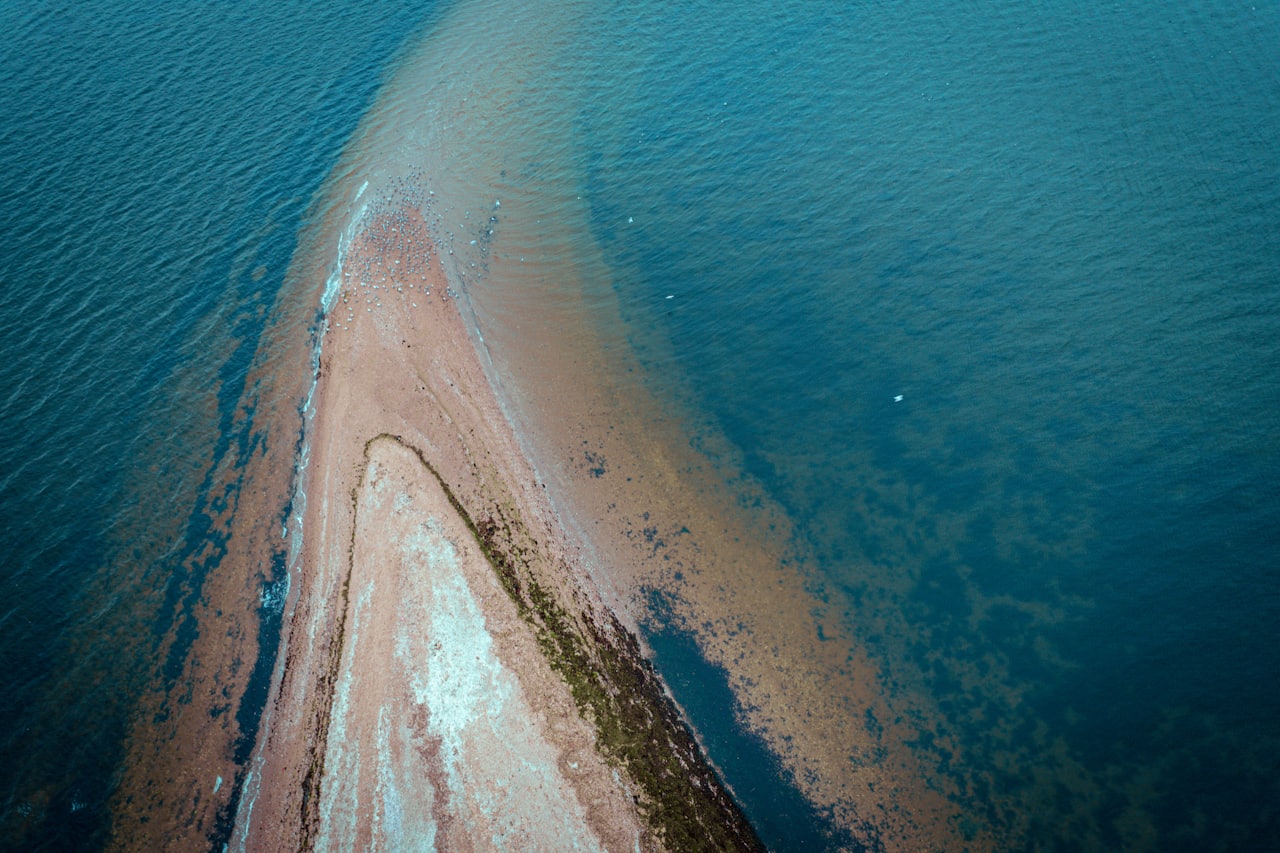
A hook-shaped peninsula reaching into the Atlantic. The lighthouses and seals of Chatham, the artists’ town and whale-watching of Provincetown, and the dunes and lighthouses of the National Seashore make up New England’s most quintessential summer coast.

Guide’s notes

The geography is itself a good story: all of Cape Cod was piled up at the end of a glacier, its sandbars are still on the move, and its lighthouses have been relocated whole more than once to escape coastal erosion — a land that is still drifting.

Photo spot: Nauset Light and Highland Light; the seals at Chatham’s fish pier; the dune trails.

Martha's Vineyard
Martha's Vineyard, MAcoastalFull day

Martha's Vineyard

Jun–Sep

A resort island reached by ferry. The colourful gingerbread cottages of Oak Bluffs, the white whaling-captains’ houses of Edgartown and the red clay cliffs of Aquinnah each have their own character.

Guide’s notes

The gingerbread cottages grew out of nineteenth-century Methodist camp meetings — first tents, then tents rebuilt as wooden houses, which is why they are so small and so intricate. Explain the origin and a row of pretty houses turns from merely charming into genuinely interesting.

Photo spot: The gingerbread cottages of Oak Bluffs; the white houses and lighthouse of Edgartown; the red cliffs of Aquinnah.

Newport Mansions & Cliff Walk
Newport, RIhistoric~5 hrs

Newport Mansions & Cliff Walk

May–Oct

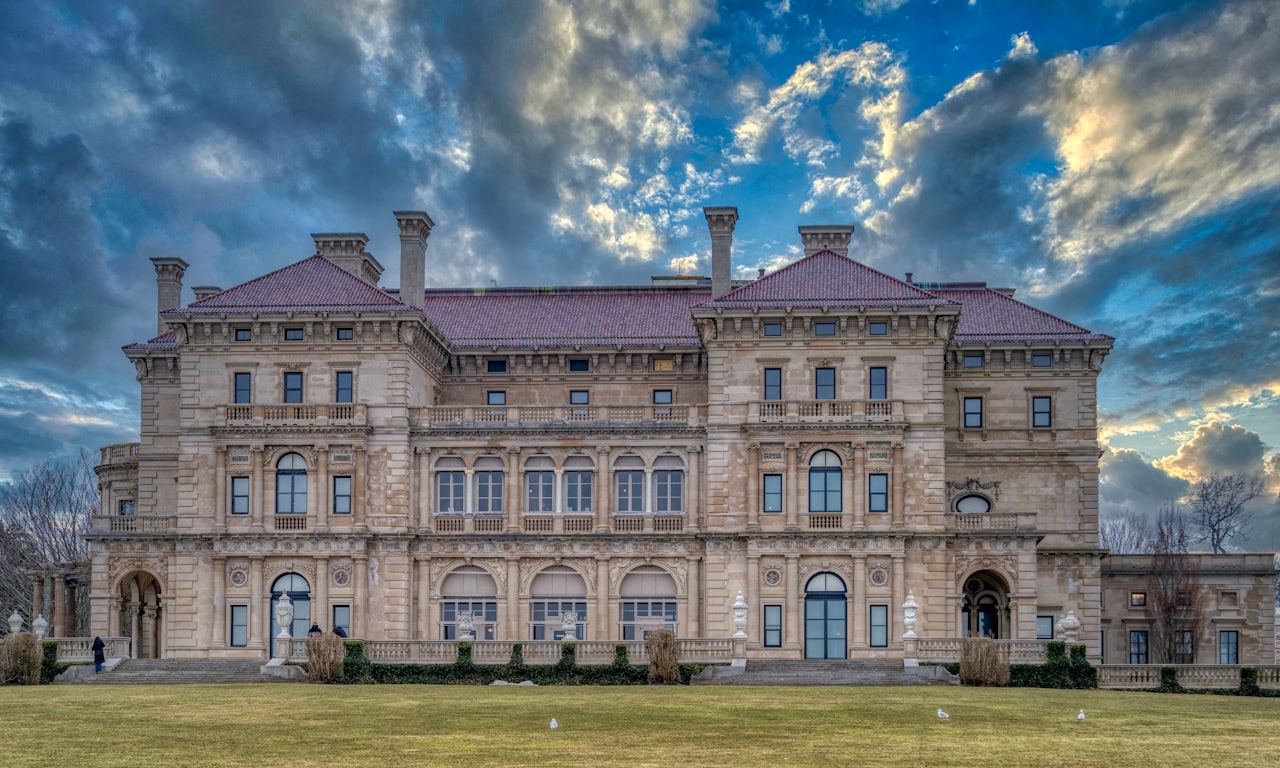
The summer “cottages” of America’s Gilded Age — The Breakers, Marble House and others — European palaces transplanted whole in scale and ornament. The Cliff Walk runs along the shore, mansions on one side and the Atlantic on the other.

Guide’s notes

The Gilded Age is a key to understanding modern America: vast fortunes built on railroads and steel, income tax at almost nothing, and the Progressive reforms that followed. Told in the great hall of The Breakers, it is more persuasive than in any museum. Another thread is the word “cottage” — the tycoons’ false modesty, itself a form of display.

Photo spot: The ocean façade of The Breakers; the mansions and sea from the Cliff Walk; the ballroom of Marble House.

Yale University
New Haven, CTcampus~1.5 hrs

Yale University

Year-round

An Ivy League university whose campus is known for its Gothic Revival architecture. Sterling Memorial Library is shaped like a cathedral, and the Beinecke Rare Book Library’s translucent marble walls glow amber in the sun, holding a Gutenberg Bible within.

Guide’s notes

The Beinecke Library is the star of the visit: the whole building has no windows, its walls made of marble sliced thin enough to pass light, at once shielding the rare books from ultraviolet and filling the interior with a soft glow — architecture resolving the conflict between preserving and viewing. The design moves any audience.

Photo spot: Inside the Beinecke Library (the light through the marble, best on a clear day); Harkness Tower; the Old Campus quadrangle.

Brown University & Providence, RI
Providence, RIcampus~1.5 hrs

Brown University & Providence, RI

Year-round

An Ivy League university known for its open curriculum. The campus sits on College Hill next to the Rhode Island School of Design (RISD), amid a well-preserved historic district.

Guide’s notes

Brown’s open curriculum, with no required core, sits at one extreme of American undergraduate education, the exact opposite of Columbia’s core curriculum. Set the two side by side and parents immediately grasp that choosing a college is not about rank but about a match of philosophy — the single most valuable point one can make.

Photo spot: The Van Wickle Gates; the historic streets of College Hill; the RISD Museum.

Kancamagus Highway
White Mountains, NHnature~3 hrs

Kancamagus Highway

Late Sep–mid Oct (foliage) · also fine in summer

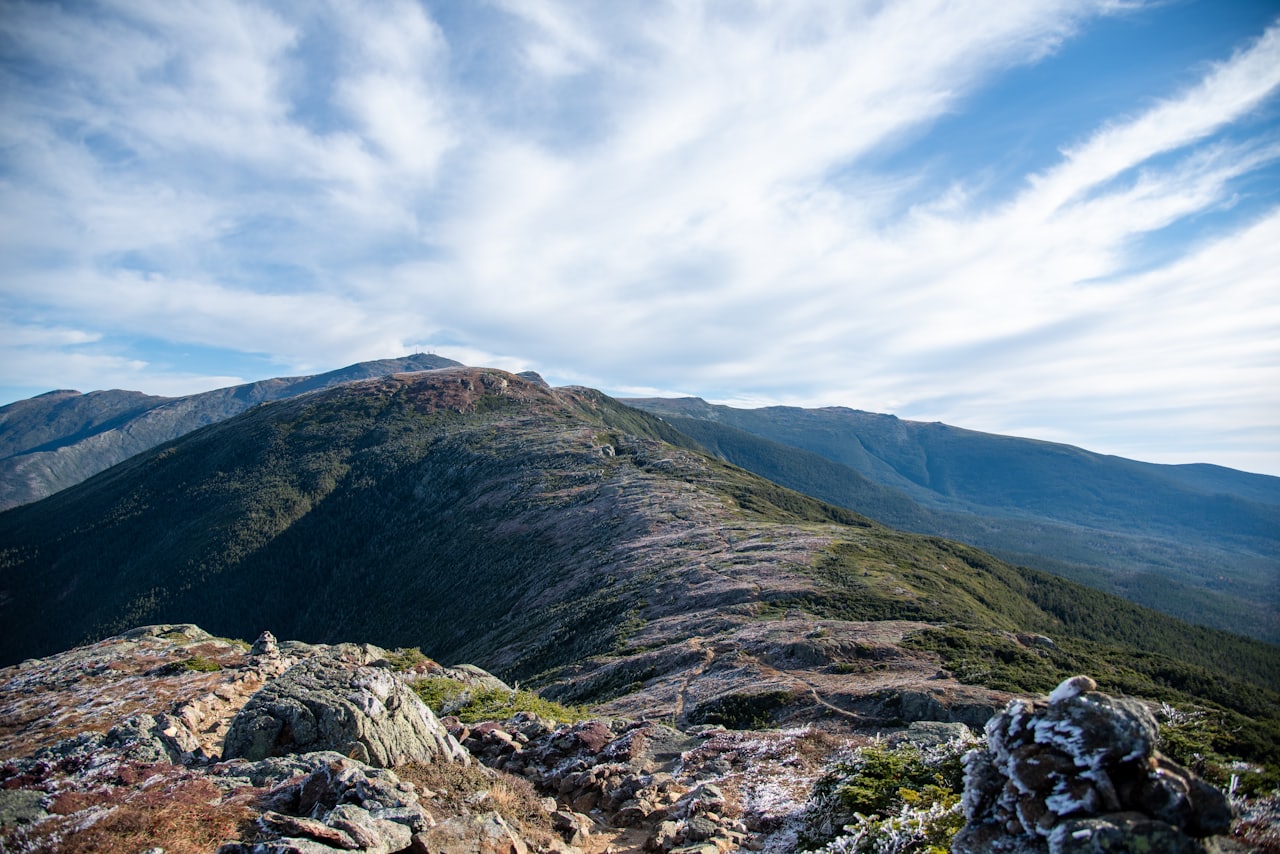
A scenic road of about 55 kilometres through the White Mountain National Forest, with no commercial development along its length, and one of the most famous fall-foliage drives in the country. It is dotted with overlooks, waterfalls and riverside picnic spots.

Guide’s notes

Autumn colour is the product of latitude, altitude and temperature swing together, and on the same day a summit and a valley can differ by a whole stage of colour. Explain this and guests understand why the “best time” shifts every year — and stop blaming the schedule.

Photo spot: The Sugar Hill overlook; Rocky Gorge; the Lower Falls river valley.

Mount Washington Cog Railway
Bretton Woods, NHnature~3 hrs

Mount Washington Cog Railway

May–Oct

Built in 1869, the world’s first mountain-climbing cog railway, ascending to the summit of Mount Washington, the highest peak in the northeastern United States. The summit is famous for extreme weather and long held the record for the highest surface wind speed ever measured.

Guide’s notes

Two things are worth telling here: that the railway was once thought a madman’s idea (“you might as well build one to the moon”), and the extreme-weather records of the summit observatory. Engineering history plus natural extremes appeals equally to technical guests and to families.

Photo spot: The cog train climbing (from the side); the sea of cloud at the summit; the ridgelines along the way.

Franconia Notch State Park & Flume Gorge
Lincoln, NHnature~2.5 hrs

Franconia Notch State Park & Flume Gorge

May–Oct

A boardwalk threads through a granite gorge between near-vertical rock walls, with a fast stream running through the bottom year-round. The park also has an aerial tramway up Cannon Mountain.

Guide’s notes

There is the Old Man of the Mountain to tell — New Hampshire’s emblematic rock profile, which collapsed in 2003. A state put a stone face on its licence plates and its coins, and then it fell: a complete story about natural symbols and human feeling.

Photo spot: The gorge boardwalk; autumn colour from the tramway; the Old Man of the Mountain memorial site.

Stowe & Woodstock, Vermont
Stowe / Woodstock, VTnature~5 hrs

Stowe & Woodstock, Vermont

Sep–Oct (foliage) · Dec–Mar (skiing)

The most quintessential New England small-town scenery in Vermont: white-steepled churches, covered bridges, maple-sugar farms and dairies. Woodstock is often named one of America’s prettiest towns, and Stowe is a major ski town in the East.

Guide’s notes

Maple syrup is the best hands-on content: it takes roughly a 40-to-1 evaporation ratio to turn sap into syrup, and one tree yields very little in a season. Put those numbers out and guests see price and “purity” quite differently — and the shopping goes more smoothly too.

Photo spot: A covered bridge; a white church steeple against autumn colour; the boiling house of a maple-sugar works.

Portland Head Light & Acadia National Park
Portland / Bar Harbor, MEcoastalFull day

Portland Head Light & Acadia National Park

Jun–Oct

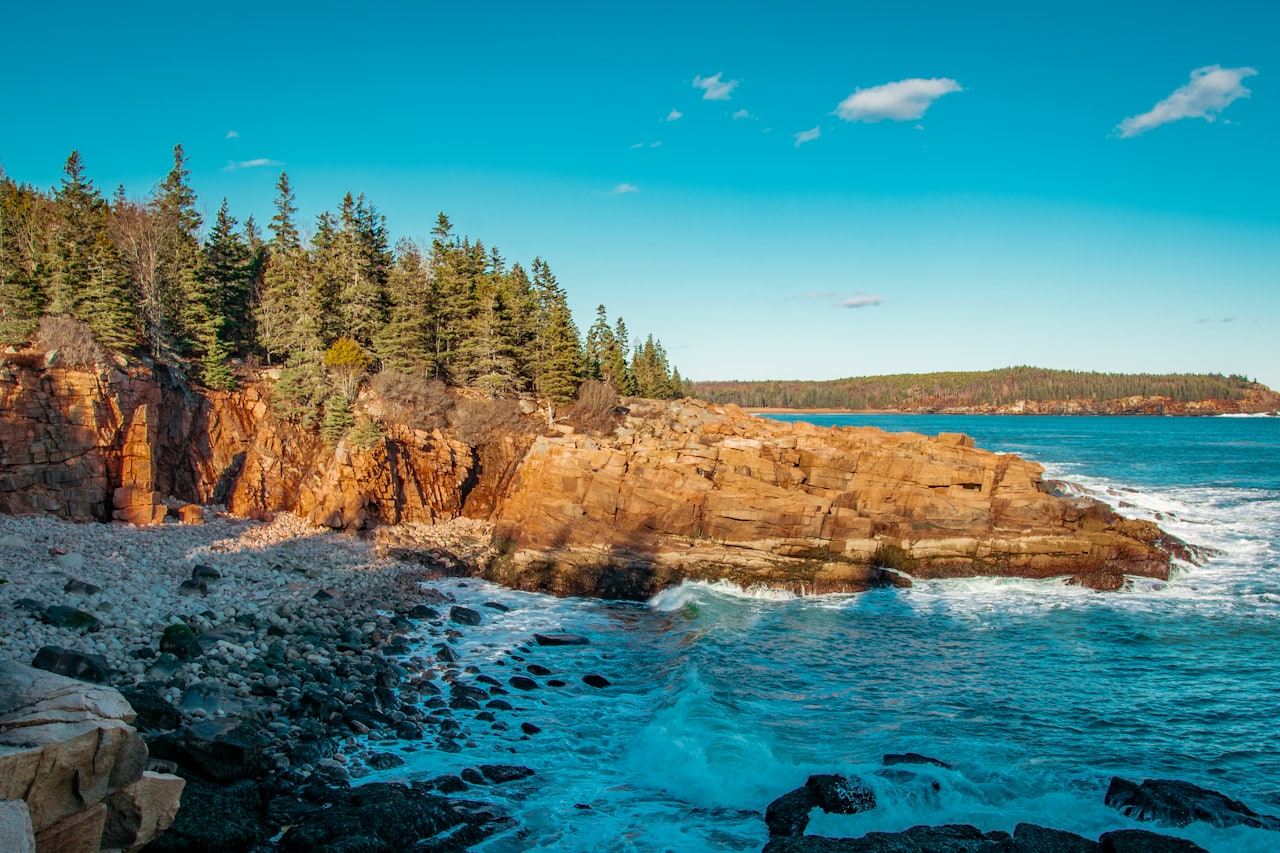
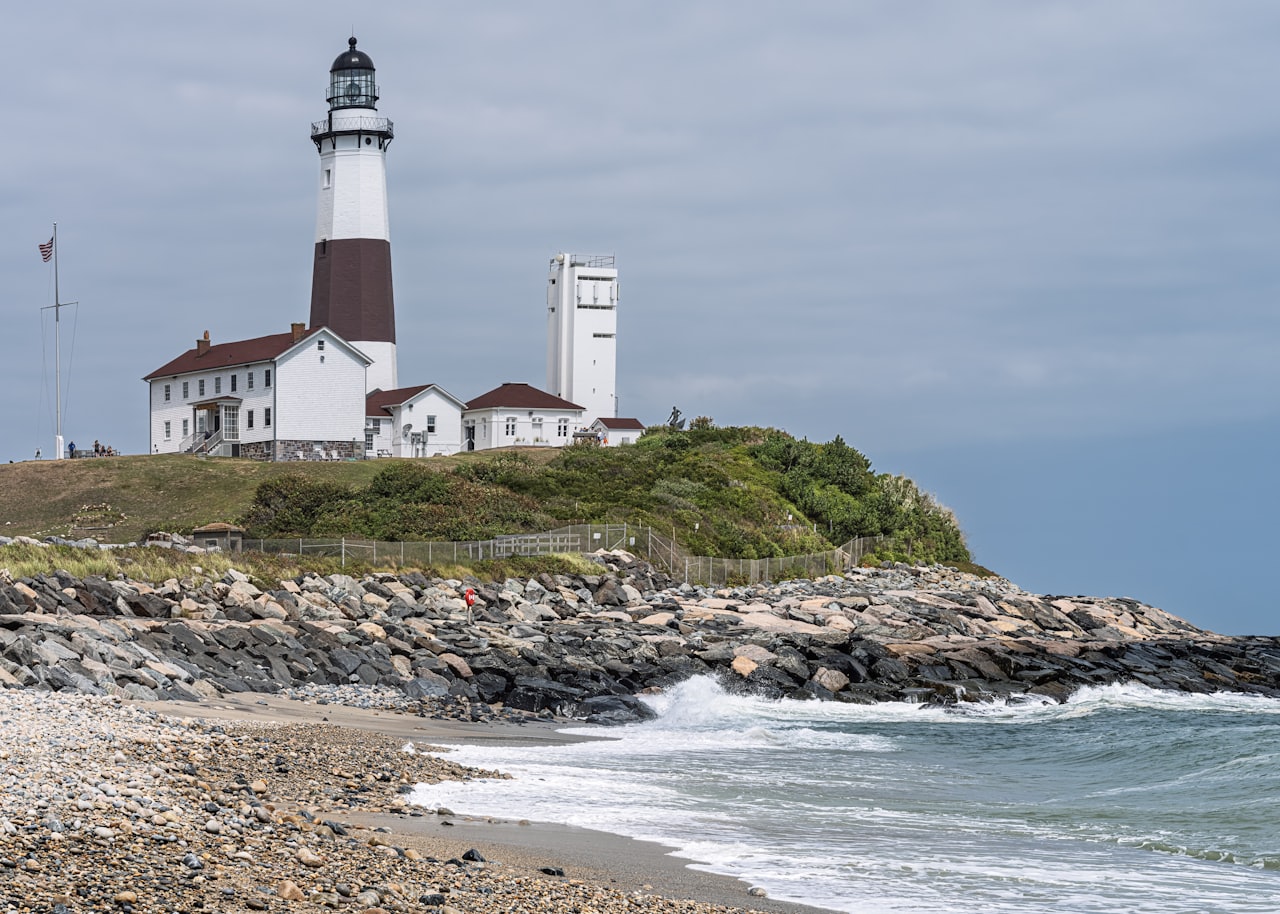
Portland Head Light is one of the most photographed lighthouses in America; in Acadia National Park, Cadillac Mountain is among the first places on the East Coast to catch the sunrise, and the park holds rocky shores, lakes and gravel carriage roads.

Guide’s notes

Acadia’s origins are worth telling: it is a national park pieced together from privately donated land, and the carriage roads the Rockefeller family paid to build still bar motor vehicles to this day — how the wealthy turned private property into public heritage, a classic case of American philanthropy.

Photo spot: Portland Head Light and the rocks (early morning); sunrise from Cadillac Mountain; Jordan Pond and the Bubbles.

white lighthouse on a grassy hill by the sea

Have a group heading to the States?

Tell us the dates and the cities. We'll come back with a clear, itemised plan.

Start an enquiry