Los Angeles Classic · 3 Days
The city’s landmarks and film-world icons, in three unhurried days.
- Duration
- 3 days / 2 nights
- Best season
- Year-round
- Group size
- 10–40 (group)
- Route
- Los Angeles → Los Angeles
Overview
A first, well-paced look at Los Angeles: Hollywood and the Griffith Observatory at sunset, the Getty and the coast, and a downtown that reveals the city’s Spanish and Mexican origins. Everything is linked by a private chauffeured vehicle, with careful time buffers for LA traffic.
Service note: This is a private, fully customisable ground programme. All transport is performed by licensed, insured third-party carriers, with chauffeured vehicles scaled to group size. We provide non-ticketed ground services only, and build in generous time buffers for Los Angeles traffic.
Highlights
- Beyond the Hollywood cliché — Olvera Street reveals a city that began as a Spanish and Mexican town
- The Griffith Observatory’s public spirit — its telescopes free to everyone
- The Getty Center’s architecture — an arrival sequence designed from the tram station on
- Santa Monica Pier at sunset, at the western end of Route 66
- Rodeo Drive and Beverly Hills
- The Broad and Walt Disney Concert Hall — downtown’s cultural axis
Day-by-day
 Day 1
Day 1Hollywood and a Hilltop View
The film-world icons by day, then up to the Griffith Observatory for the city at sunset.
- Hollywood Walk of Fame & the Chinese Theatre
- Lunch
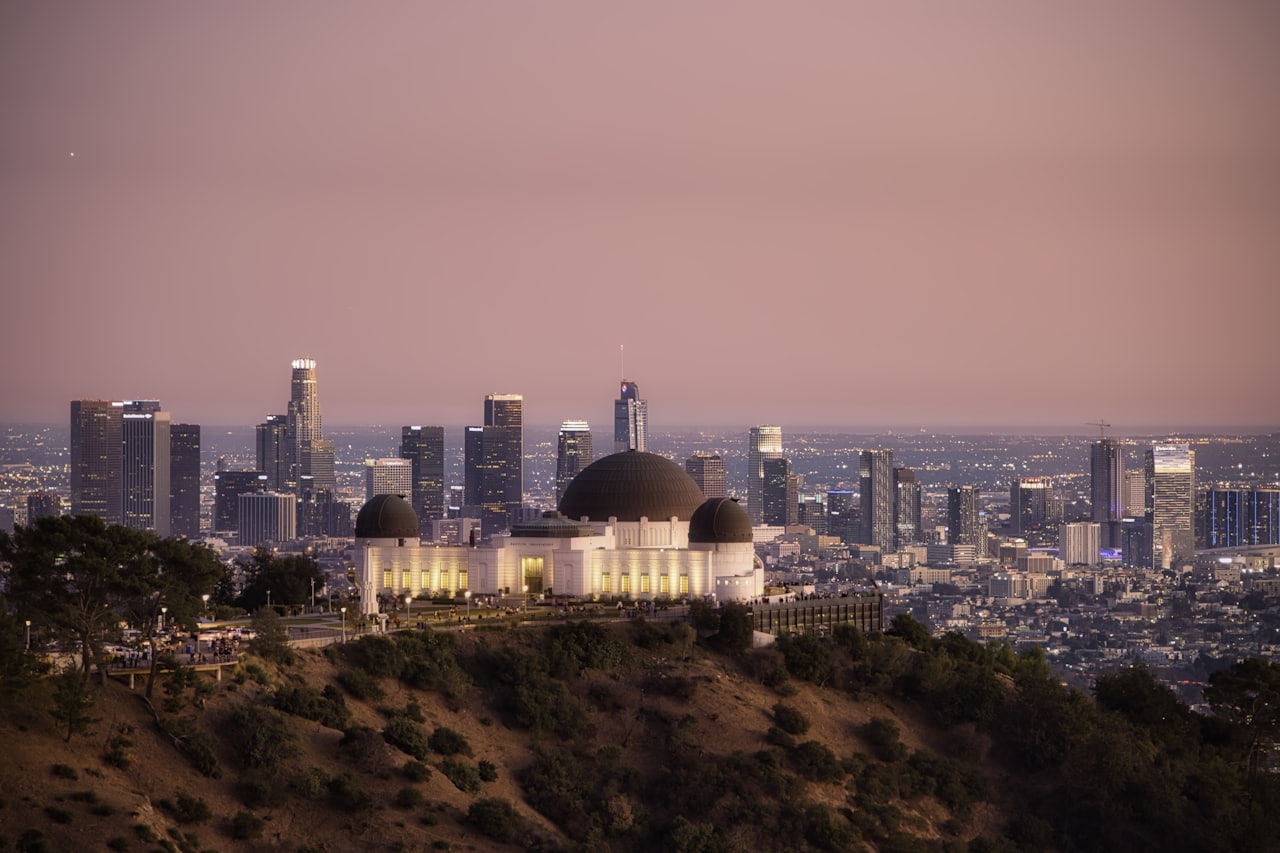
- Griffith Observatory at sunset
- Dinner
Transport: Private chauffeured vehicleMeals: Lunch & dinner (group meals suggested)Overnight: Los Angeles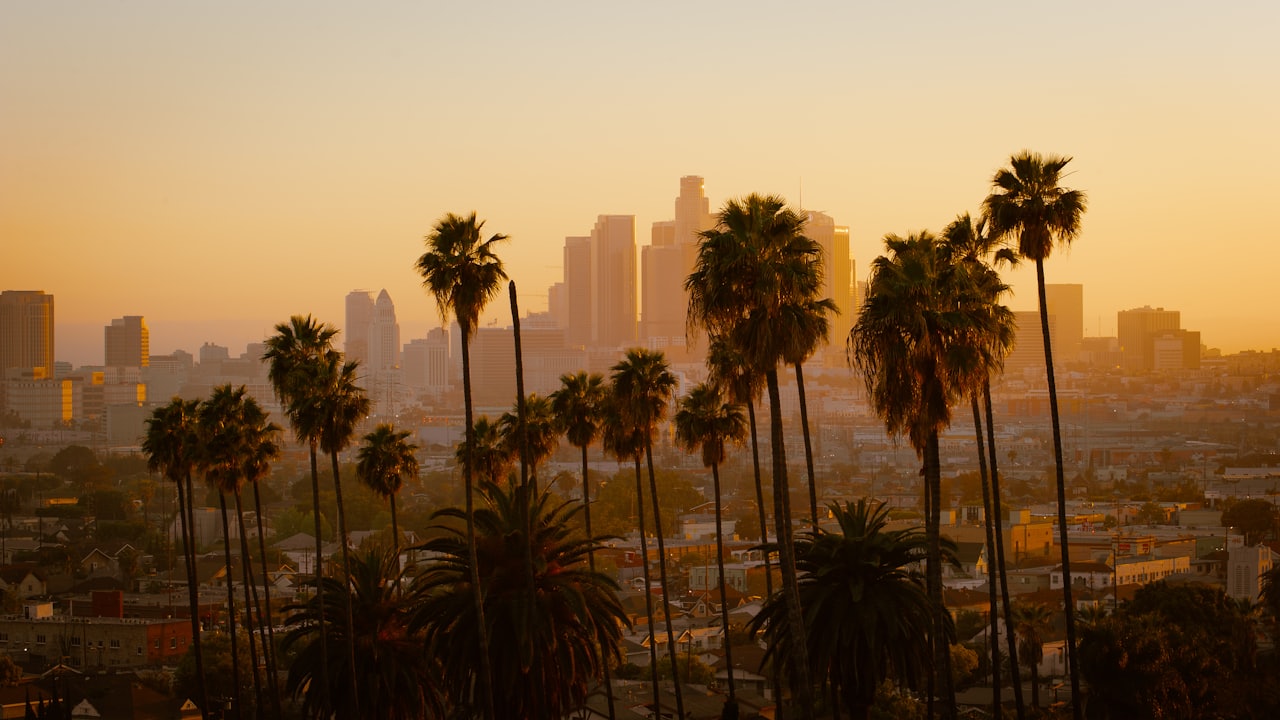 Day 2
Day 2Art and the Coast
A half-day at the Getty, then Beverly Hills and Santa Monica Pier for sunset by the sea.
- The Getty Center (half day)
- Lunch
- Beverly Hills & Rodeo Drive
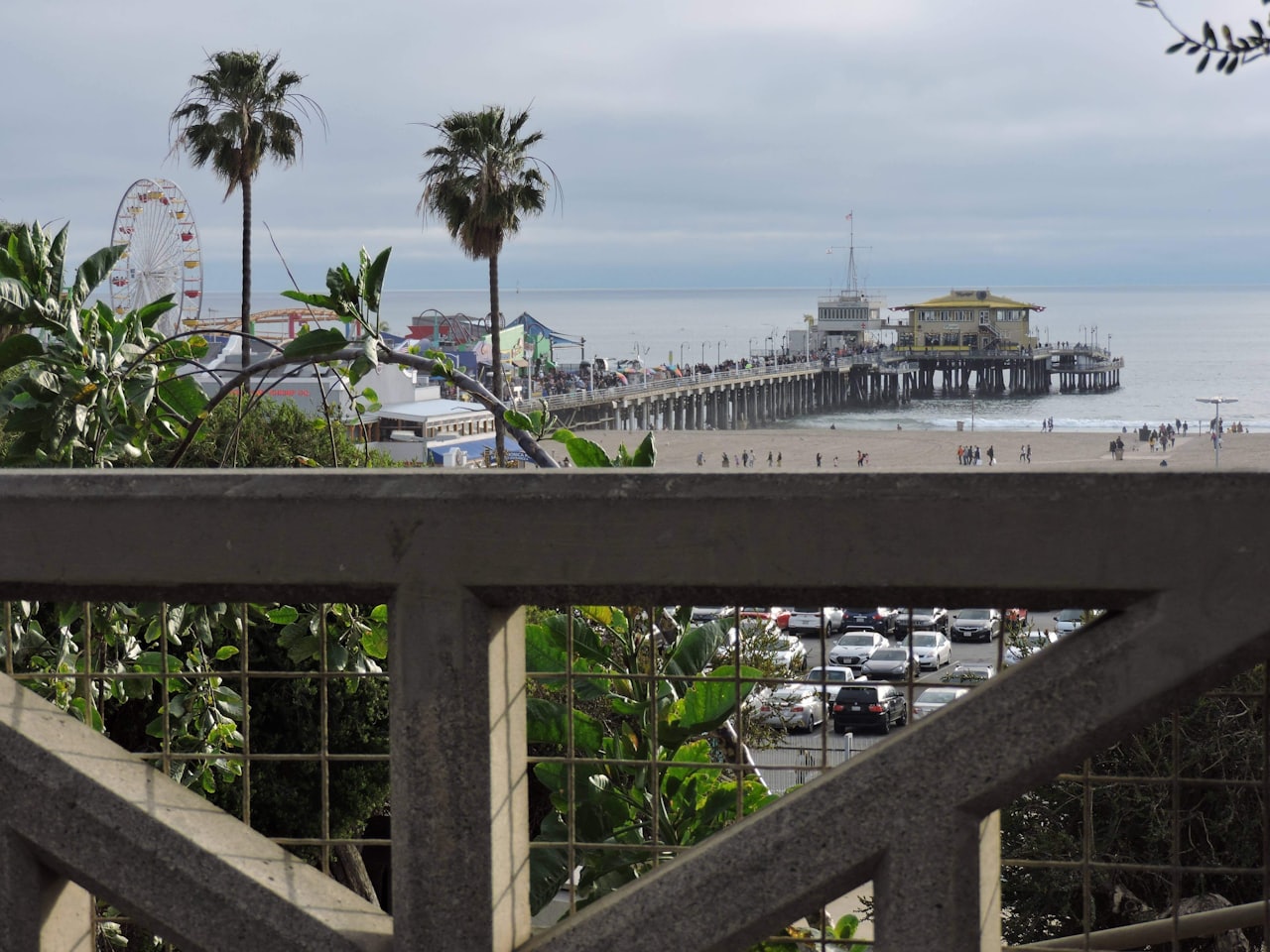
- Santa Monica Pier & Beach at sunset
Transport: Private chauffeured vehicleMeals: LunchOvernight: Los Angeles- Day 3
Downtown and the Old Pueblo
Downtown’s cultural axis, the city’s Spanish–Mexican origins at Olvera Street, and Urban Light to finish.
- The Broad & Walt Disney Concert Hall
- Lunch
- Union Station & Olvera Street
- LACMA & Urban Light
Transport: Private chauffeured vehicleMeals: Lunch
Included
- Private chauffeured vehicle and driver throughout
- Bilingual tour leader and guiding
- Accommodation as per itinerary
- Main attraction entries listed in the itinerary (confirmed at booking)
Not included
- A major theme park — optional full-day add-on
- Some meals
- Gratuities for guide and driver
Gallery
Places on this journey
Hollywood Walk of Fame & TCL Chinese Theatre
Year-round
Pink terrazzo stars stud the pavement for blocks on end. In the forecourt of the Chinese Theatre — a 1927 building in Orientalist style — the concrete keeps the hand- and footprints of many film stars.
Guide’s notes
A candid note helps here: the real streetscape can feel a long way from the Hollywood of the imagination. One intriguing detail — a star on the Walk of Fame is a commercial arrangement that must be applied and paid for, not purely an honour.
Photo spot: The forecourt hand- and footprints at the Chinese Theatre; close-ups of the terrazzo stars; the Dolby Theatre steps looking toward the Hollywood Sign.
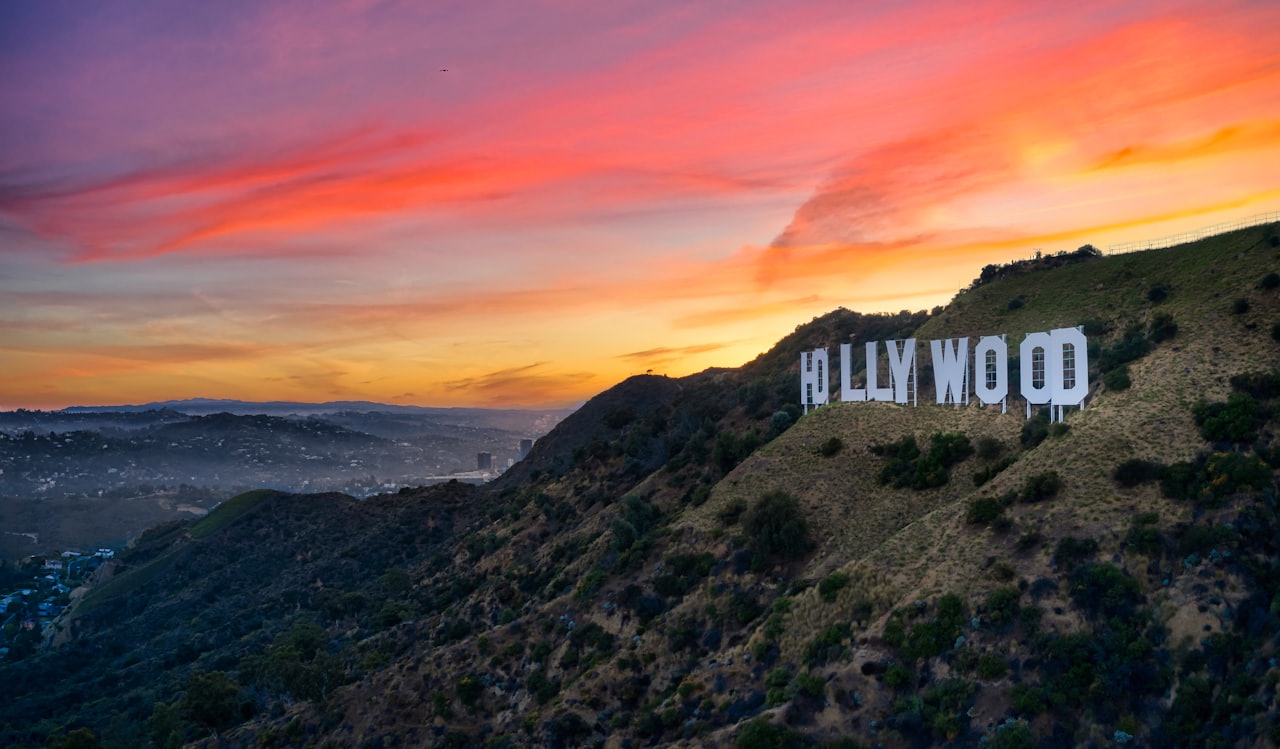
Hollywood Sign Viewpoints
Year-round · best visibility in the morning
The giant white letters on the hillside went up in 1923 as a real-estate advertisement (originally reading HOLLYWOODLAND), and later became the symbol of the entire film industry.
Guide’s notes
It began life as a real-estate billboard — the original letters read HOLLYWOODLAND — before becoming the symbol of an entire film industry. Once so dilapidated it nearly collapsed, it was rebuilt when a group of well-known figures each sponsored a letter.
Photo spot: From the west side of Griffith Observatory; toward Lake Hollywood Park (confirm vehicle rules).
Griffith Observatory
Year-round · best at sunset
An Art Deco public observatory on the southern slope of the Hollywood Hills. Its terraces take in the whole Los Angeles basin and a distant view of the Hollywood Sign — one of the city’s most iconic viewpoints.
Guide’s notes
The observatory was built on a single condition from its benefactor — that its telescopes stay free to the public, in the belief that one look through a telescope can change how a person sees the world. Its Foucault pendulum is a classic way to witness the Earth’s rotation without ever leaving the ground.
Photo spot: The west lawn — the observatory dome and the Hollywood Sign in one frame; the east terrace over downtown (a sea of city lights after sunset).
The Getty Center
Year-round
A hilltop complex of white travertine designed by Richard Meier, reached by a dedicated tram. It holds European painting and decorative arts, and its Central Garden is a work of landscape art in itself.
Guide’s notes
Here the architecture rewards attention as much as the collection: the walls are clad in Italian travertine, deliberately left with its fossil textures and rough-split faces, and the whole complex is arranged along the ridgeline so that arrival — beginning at the tram station — is itself a designed sequence.
Photo spot: Overlooking the Central Garden (its spiral pool); the white geometric facades against blue sky; the west terrace over the LA basin and the Pacific.
Beverly Hills & Rodeo Drive
Year-round
An upscale retail district whose palm-lined streets and boutique facades make one of LA’s most cinematic streetscapes. The Beverly Hills floral sign and City Hall are the classic photo stops.
Guide’s notes
There is more here than shopping: Beverly Hills is an independent city entirely surrounded by Los Angeles, whose residents once voted against annexation to keep their own schools and services — a vivid case of American local self-government.
Photo spot: Rodeo Drive with its palms; the Beverly Hills floral sign; the Spanish Revival tower of City Hall.
Santa Monica Pier & Beach
Year-round · best May–Oct
A little amusement park and Ferris wheel on the timber pier, marking the western end of Route 66. Broad sands and a bike path run south toward Venice Beach.
Guide’s notes
The pier marks the western end of Route 66 — the highway that ran all the way from Chicago to the Pacific, carrying Depression-era migration westward, post-war road trips and the whole idea of the American dream: keep heading west until the road runs out.
Photo spot: The pier’s Ferris wheel at sunset (backlit silhouette); the Route 66 end sign; the beach boardwalk.
The Broad & Walt Disney Concert Hall
Year-round
The Broad is known for its contemporary collection, its galleries wrapped in a honeycomb “veil”; next door, Gehry’s Walt Disney Concert Hall is a landmark of deconstructivism in curved stainless steel.
Guide’s notes
The two buildings are best read together: one wraps its galleries in a porous concrete “veil” for soft, diffused light; the other, Gehry’s stainless-steel concert hall, reflects the sun in sweeping curves (some surfaces were later matted where the glare grew too strong). Two very different answers, on one street, to the question of how to handle light.
Photo spot: The concert hall’s stainless-steel curves (reflections in strong light); the Broad’s honeycomb facade; the two buildings facing each other across the street.
Union Station & Olvera Street
Year-round
Union Station is a masterful railway terminal blending Spanish Colonial Revival and Art Deco, its waiting hall’s timber ceiling and leather seats well preserved; across the street, Olvera Street — one of LA’s oldest blocks — is now a Mexican-style market.
Guide’s notes
This is one of the best places to understand the city’s identity. Los Angeles began as a Spanish and then Mexican town — its full original name was El Pueblo de Nuestra Señora la Reina de los Ángeles — and only became part of the United States after 1848. Olvera Street is the physical remnant of that history.
Photo spot: The waiting hall’s timber beams and chandeliers; the station courtyard; Olvera Street’s bunting-draped market.
LACMA & Urban Light
Year-round
One of the largest art museums in the American West. Out front, Urban Light — an installation of more than two hundred restored vintage street lamps — is the most photographed public artwork in Los Angeles.
Guide’s notes
Urban Light is a story in its own materials: the lamps were gathered from towns across Southern California — different eras, different models — then restored and arranged in a grid, the city’s old parts reorganised into a new civic symbol. It looks its best lit up after dark.
Photo spot: The Urban Light array (lit at night, or empty at dawn); portraits framed among the lamp posts.
More in this region
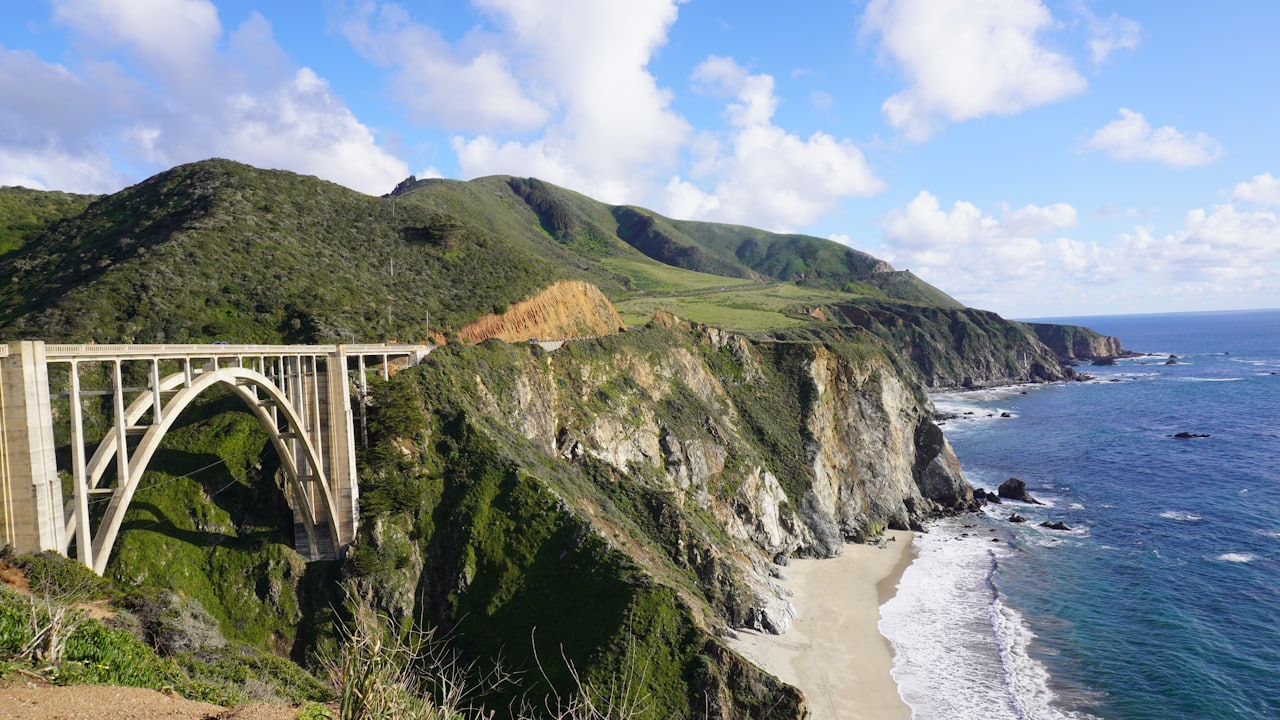
Pacific Coast Highway LA to SF · 5 Days
The definitive California coast drive: Malibu and Santa Barbara, Hearst Castle, the cliffs of Big Sur and Bixby Bridge, Monterey, and into San Francisco. Told not just as scenery but as story — a Depression-era road, forever contending with landslides.
View journey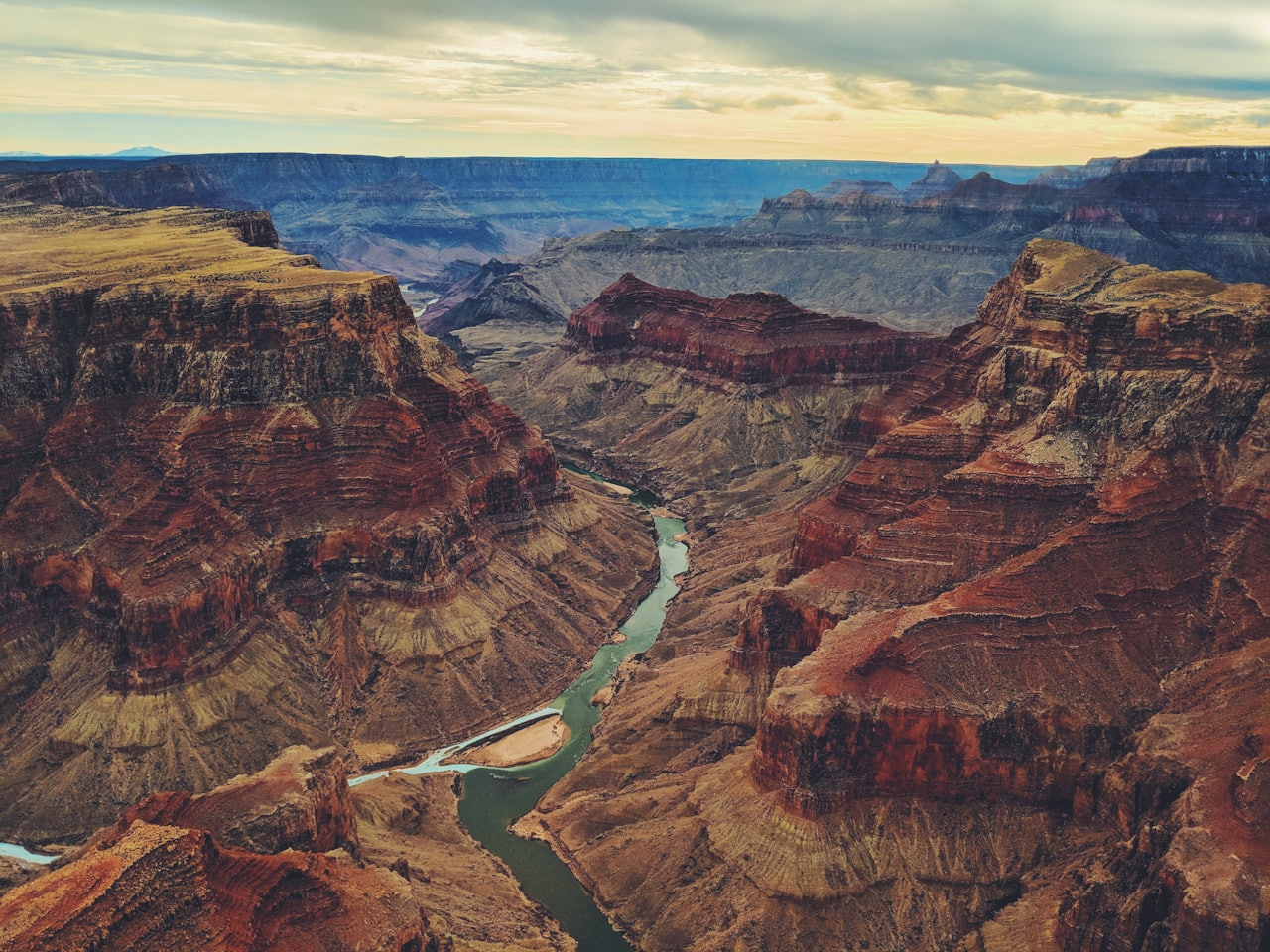
Grand West Loop · 8 Days
The West’s signature circuit: Los Angeles, the neon of the Las Vegas Strip, the Grand Canyon, Yosemite’s granite valley and San Francisco. We state plainly which canyon rim you visit and how long each drive runs — the details others tend to blur.
View journeyLos Angeles Major-Event Ground Services Program
A modular ground-services program for major-event periods: airport transfers, hotel-to-activity-area shuttles, all-day team vehicles, bilingual escort and logistics support. We provide ground services only — we do not sell event tickets or ticket-inclusive packages; admission should be arranged through the event’s own ticketing channels.
View journey