Northeast Ivy Campus Tour · 5 Days
A tour of Northeast campuses built around educational ideas, for students and parents.
- Duration
- 5 days / 4 nights
- Best season
- Year-round (avoiding exam weeks and campus holiday closures)
- Group size
- 15–40 guests
- Route
- Boston → New York
Overview
Five days across the great campuses of the Northeast, from Harvard and MIT to Wellesley, Brown, Yale and beyond. The value is not in counting gates but in making sense of what distinguishes these schools — core curriculum versus open curriculum, liberal-arts college versus research university, and the place of the women’s college. Throughout, the programme keeps strictly to public facts, with no admissions advice of any kind.
Service note: This is a private, fully customisable ground programme. All transport is performed by licensed, insured third-party carriers, with chauffeured vehicles scaled to your group. We provide non-ticketed ground services only.
Highlights
- Not six gates but the ideas that set the schools apart: core versus open curriculum, liberal-arts college versus research university
- Harvard and MIT in Cambridge, with the ideas behind each
- Wellesley College and the meaning of the women’s college
- Yale’s Beinecke Rare Book Library and Gothic quadrangles
- Helping parents move from ranking to fit — the layer few in the trade discuss
- Kept fully compliant: no admissions hints and no promises of connections
Day-by-day
 Day 1
Day 1Boston: Harvard and MIT
Harvard Yard and Harvard Square, MIT, and a close at the Boston Public Library.
- Harvard Yard and Harvard Square
- MIT’s main campus
- Lunch at Harvard Square
- The Boston Public Library
Transport: Private chauffeured vehicle throughoutMeals: Lunch at Harvard Square Day 2
Day 2Wellesley and Boston Culture
Wellesley College around Lake Waban in the morning, then the Museum of Fine Arts and Newbury Street.
- Wellesley College
- Lunch
- The Museum of Fine Arts
- Newbury Street
Transport: Private chauffeured vehicle throughoutMeals: Lunch near the college- Day 3
Brown to Yale
Brown University on College Hill in Providence, then on to Yale in New Haven.
- Brown University, Providence
- Lunch in Providence
- Yale University, New Haven
- Check in
Transport: Private chauffeured vehicle throughoutMeals: Lunch in Providence - Day 4
Yale to Princeton
The Beinecke Rare Book Library at Yale, then Princeton University, overnighting near New York or Princeton.
- The Beinecke Rare Book Library, Yale
- Lunch in New Haven
- Princeton University
- Check in near New York or Princeton
Transport: Private chauffeured vehicle throughoutMeals: Lunch in New Haven - Day 5
Columbia University to New York
Columbia University in Morningside Heights and Central Park, ending in New York or continuing with a New York programme.
- Columbia University
- Central Park
- End in New York or continue
Transport: Private chauffeured vehicle throughoutMeals: Lunch in Morningside Heights
Included
- Private chauffeured vehicle throughout
- Bilingual tour leader with an education background
- Accommodation along the route
- Visits to the publicly open areas of each campus
Not included
- Admissions consulting, application guidance or interview arrangements of any kind (not offered by this company)
- Tickets and some meals
- Gratuities
Gallery
Places on this journey
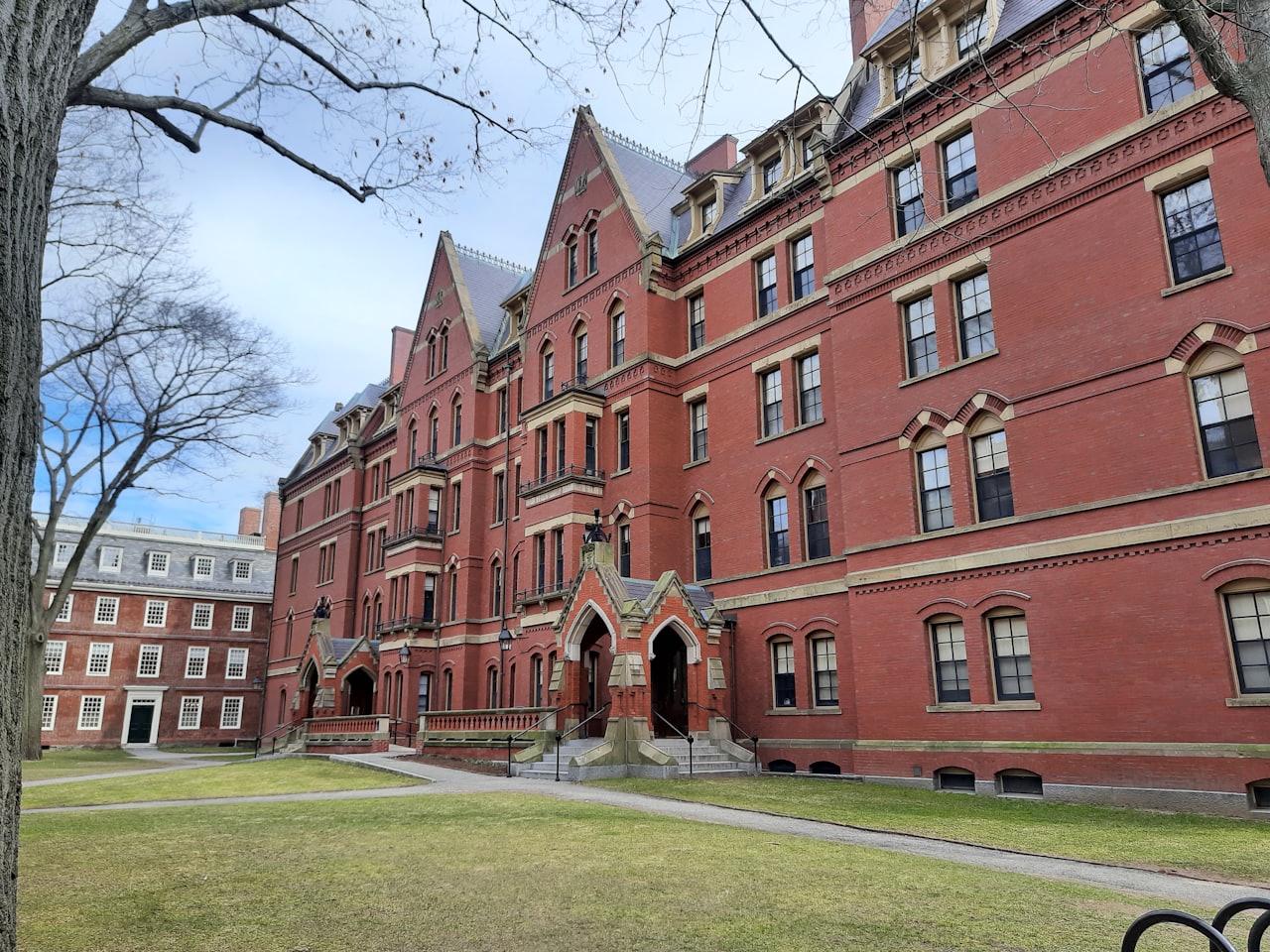
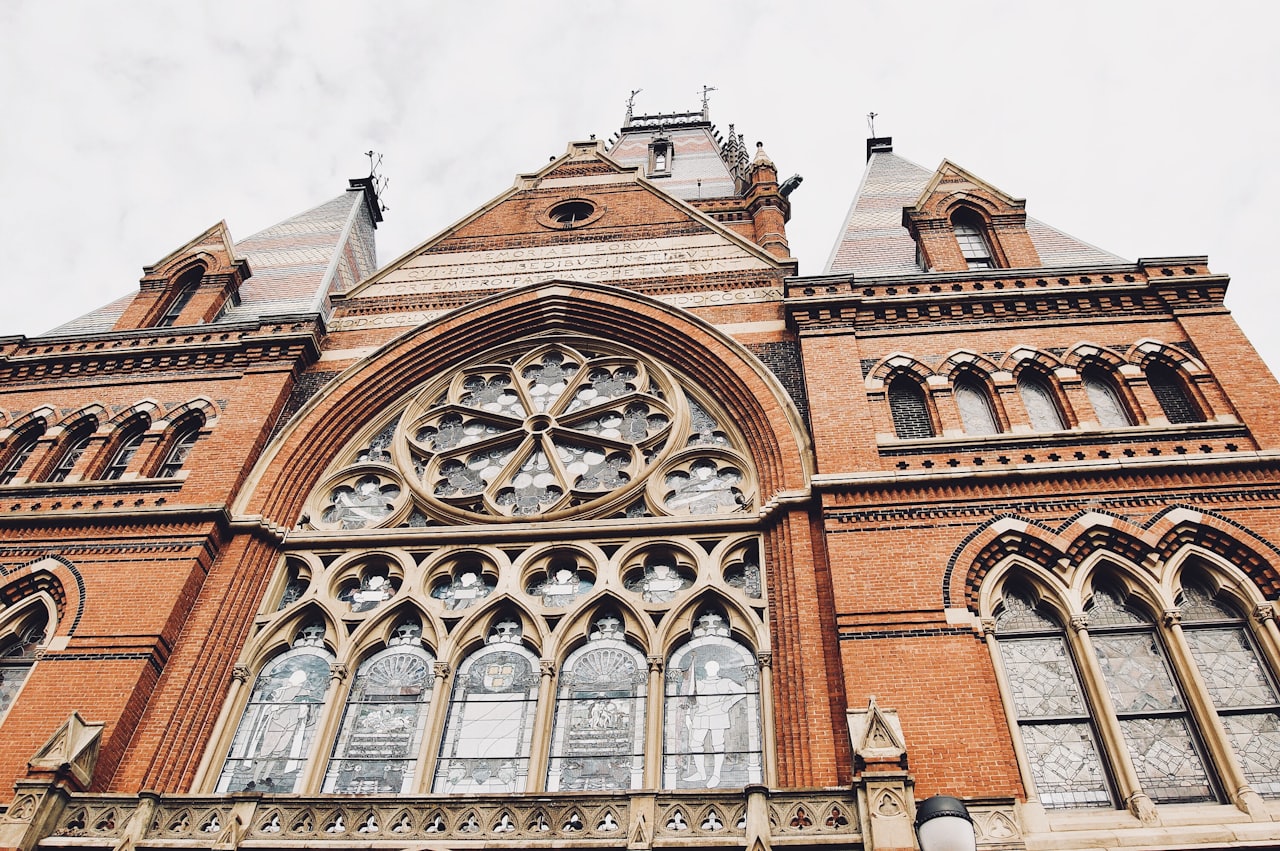
Harvard Yard, Harvard University
Year-round · best foliage Sep–Oct
The historic core of America’s oldest university. Its quadrangle, enclosed by red-brick Colonial Revival buildings, became the prototype for the American college campus.
Guide’s notes
Three details around the John Harvard statue are often misreported: it is known as the “statue of three lies” — the figure is not a true likeness (no portrait survives, so a student modelled for it), John Harvard was not the founder but its first major benefactor (he gave his library and half his estate), and the 1638 on the base is not the founding year (the college dates to 1636). The idea that rubbing the statue’s toe secures admission is a tourist-era invention, not a campus tradition. The more moving story is the Widener Library, named for Titanic victim Harry Elkins Widener and endowed by his mother.
Photo spot: Looking back from just inside Johnston Gate; the front steps of Widener Library (wide angle); the white spire of Memorial Church set against the red brick.
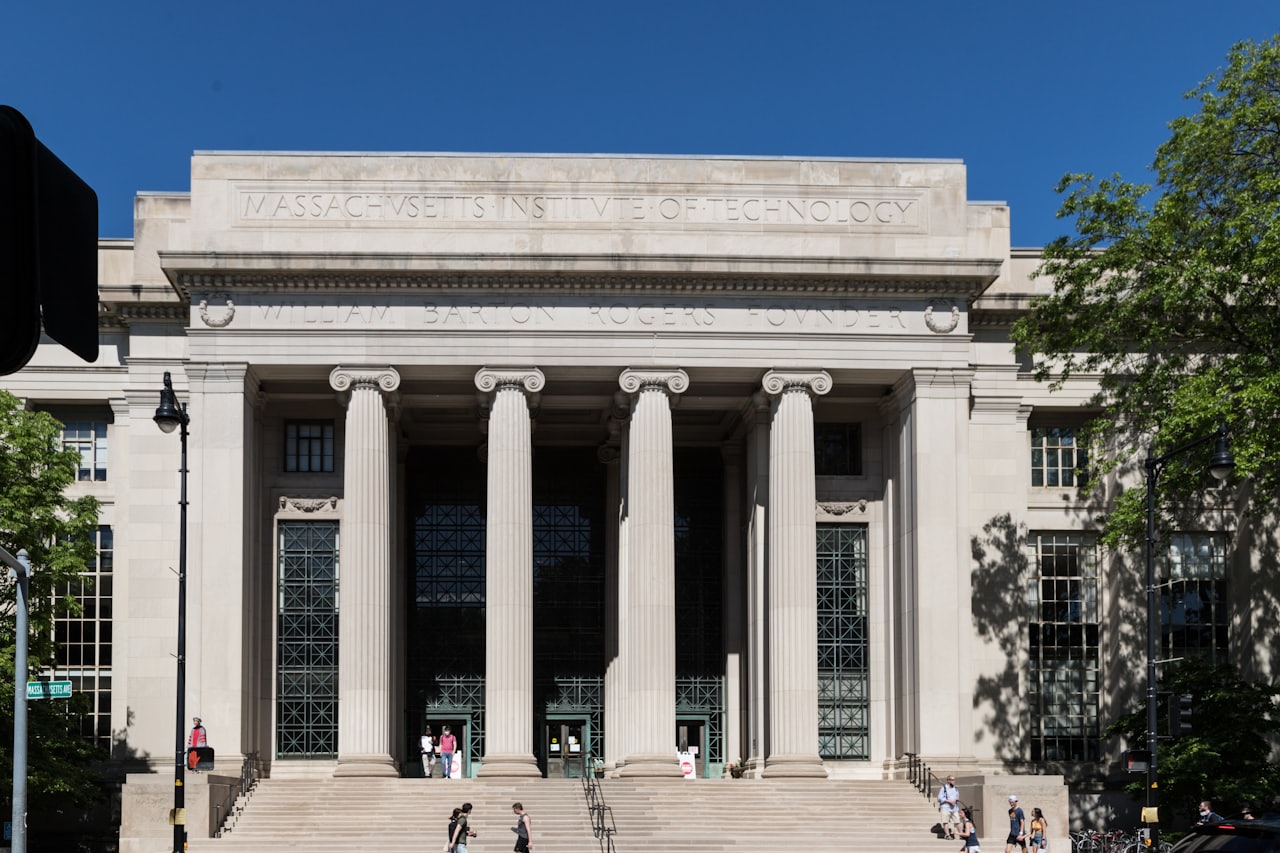
Massachusetts Institute of Technology (MIT)
Year-round
The lawn of Killian Court facing the Great Dome is MIT’s most recognisable view. The Infinite Corridor runs through the main buildings, and twice a year the sun aligns straight down it — the phenomenon known as “MIThenge”.
Guide’s notes
You can’t talk about MIT without its “hack” culture — students have famously placed a police car and a fire truck atop the Great Dome, pranks that combine engineering skill, humour and a self-imposed rule never to damage anything; they say more about the school’s character than any ranking. Set the classical symmetry of Killian Court beside Gehry’s tilting Stata Center and you see two eras of the same institution side by side.
Photo spot: Killian Court facing the Great Dome (the classic group-photo spot); the tilting façade of the Stata Center; the deep perspective of the Infinite Corridor.
Boston Public Library (McKim Building)
Year-round · a good rainy-day option
The first large public library in America supported by public taxes and free to all. The older McKim building is Italian Renaissance Revival, and the barrel vault and green lamps of Bates Hall reading room make it one of the most photographed library interiors in the world.
Guide’s notes
Carved above the entrance are the words “FREE TO ALL” — and those four words are the heart of the whole visit. In the nineteenth century, a city building a palace-like library at public expense for everyone, the poor and immigrants included, was itself a revolutionary idea. For study groups and parents, this carries more weight than ticking off any famous campus.
Photo spot: The length of Bates Hall (the rows of green lamps); the courtyard cloister; the lions on the grand staircase.
Wellesley College
Apr–Oct · best in autumn
A leading women’s liberal-arts college, its campus set around Lake Waban and among the most beautiful in New England. Chinese students including Soong Mei-ling and Bing Xin studied here, giving it a special meaning for Chinese guests.
Guide’s notes
This is a point of strong resonance for Chinese guests: it is worth explaining the women’s college as a distinctly American institution — why they persist even after co-education became the norm, and whom they have educated. Told alongside the history of their Chinese alumnae, it carries far more weight than the scenery alone. Here we keep to matters of public record and stay clear of anything to do with admissions.
Photo spot: The campus from the shore of Lake Waban; the Gothic tower; the tree-lined avenue in autumn colour.
Museum of Fine Arts, Boston (MFA)
Year-round · a top rainy-day choice
One of the finest encyclopaedic art museums in the United States. Its Egyptian, Greco-Roman and Impressionist holdings are all strong, and its Asian wing — Japanese and Chinese art in particular — is vast, a section that resonates deeply with Chinese guests.
Guide’s notes
For Chinese guests, the provenance and dispersal history of some of the Chinese objects here is an unavoidable subject. The sound approach is candour on all three counts — neither avoiding nor inflaming, stating provenance as recorded in the museum’s own published documentation, and setting the dispersal of cultural objects within the wider history of nineteenth- and twentieth-century global collecting rather than turning it into an emotional appeal. This is exactly where the professional parts from the amateur.
Photo spot: The Shapiro Family Courtyard; the Japanese garden (seasonal); the front steps.
Brown University & Providence, RI
Year-round
An Ivy League university known for its open curriculum. The campus sits on College Hill next to the Rhode Island School of Design (RISD), amid a well-preserved historic district.
Guide’s notes
Brown’s open curriculum, with no required core, sits at one extreme of American undergraduate education, the exact opposite of Columbia’s core curriculum. Set the two side by side and parents immediately grasp that choosing a college is not about rank but about a match of philosophy — the single most valuable point one can make.
Photo spot: The Van Wickle Gates; the historic streets of College Hill; the RISD Museum.
Yale University
Year-round
An Ivy League university whose campus is known for its Gothic Revival architecture. Sterling Memorial Library is shaped like a cathedral, and the Beinecke Rare Book Library’s translucent marble walls glow amber in the sun, holding a Gutenberg Bible within.
Guide’s notes
The Beinecke Library is the star of the visit: the whole building has no windows, its walls made of marble sliced thin enough to pass light, at once shielding the rare books from ultraviolet and filling the interior with a soft glow — architecture resolving the conflict between preserving and viewing. The design moves any audience.
Photo spot: Inside the Beinecke Library (the light through the marble, best on a clear day); Harkness Tower; the Old Campus quadrangle.
More in this region
Boston Elite Campus Day
A full day built around Cambridge’s two most famous institutions and the ideas behind them. From Harvard Yard to MIT and closing at the Boston Public Library, the day turns campus sightseeing into an understanding of what these schools stand for. Throughout, the focus is on education itself — with no admissions advice of any kind.
View journey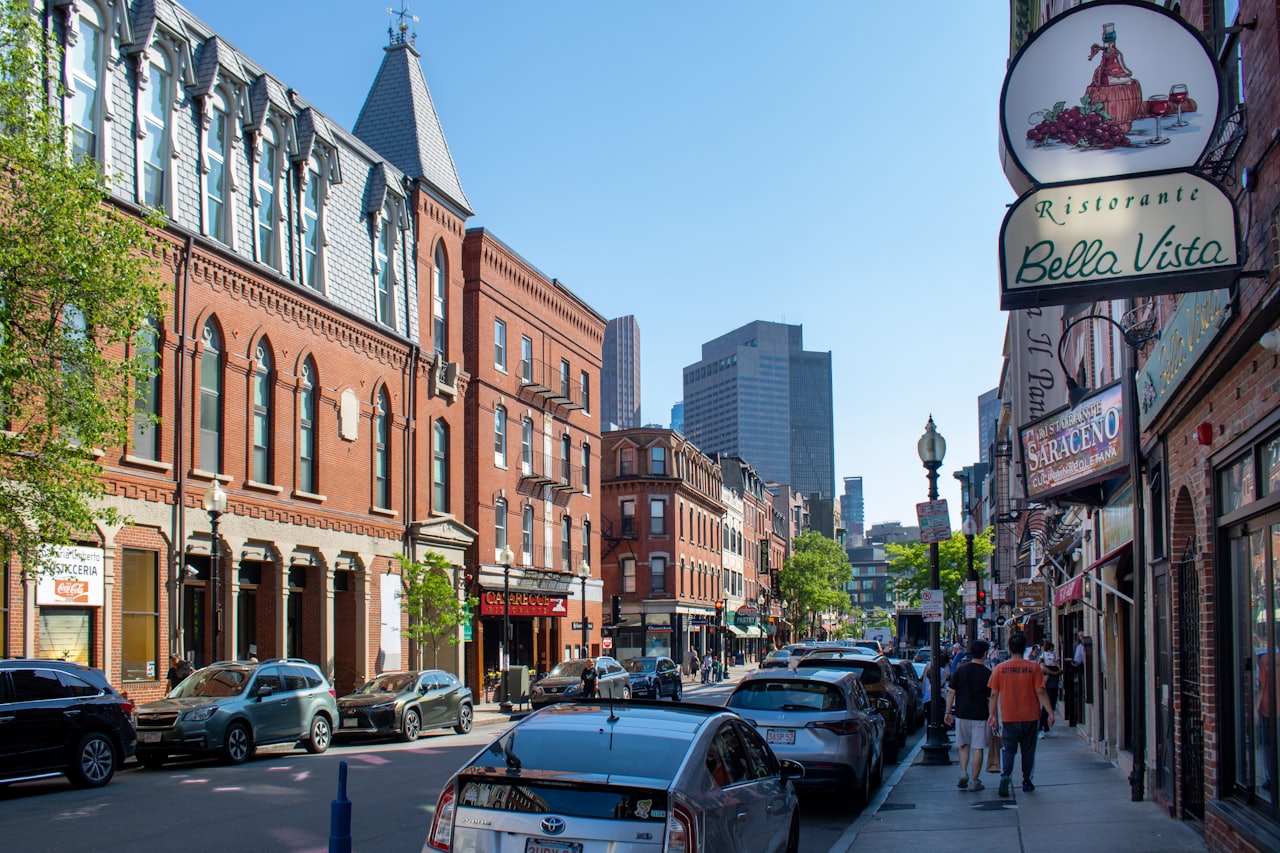
Boston City Classic · 2 Days
Two days that read Boston as a city where old and new sit face to face. Day one walks the Freedom Trail from Boston Common to Charlestown; day two crosses to the great campuses and the city’s art and riverside. The difference is in the telling — a single thread from subjects to citizens, and museum stories any guest can follow.
View journey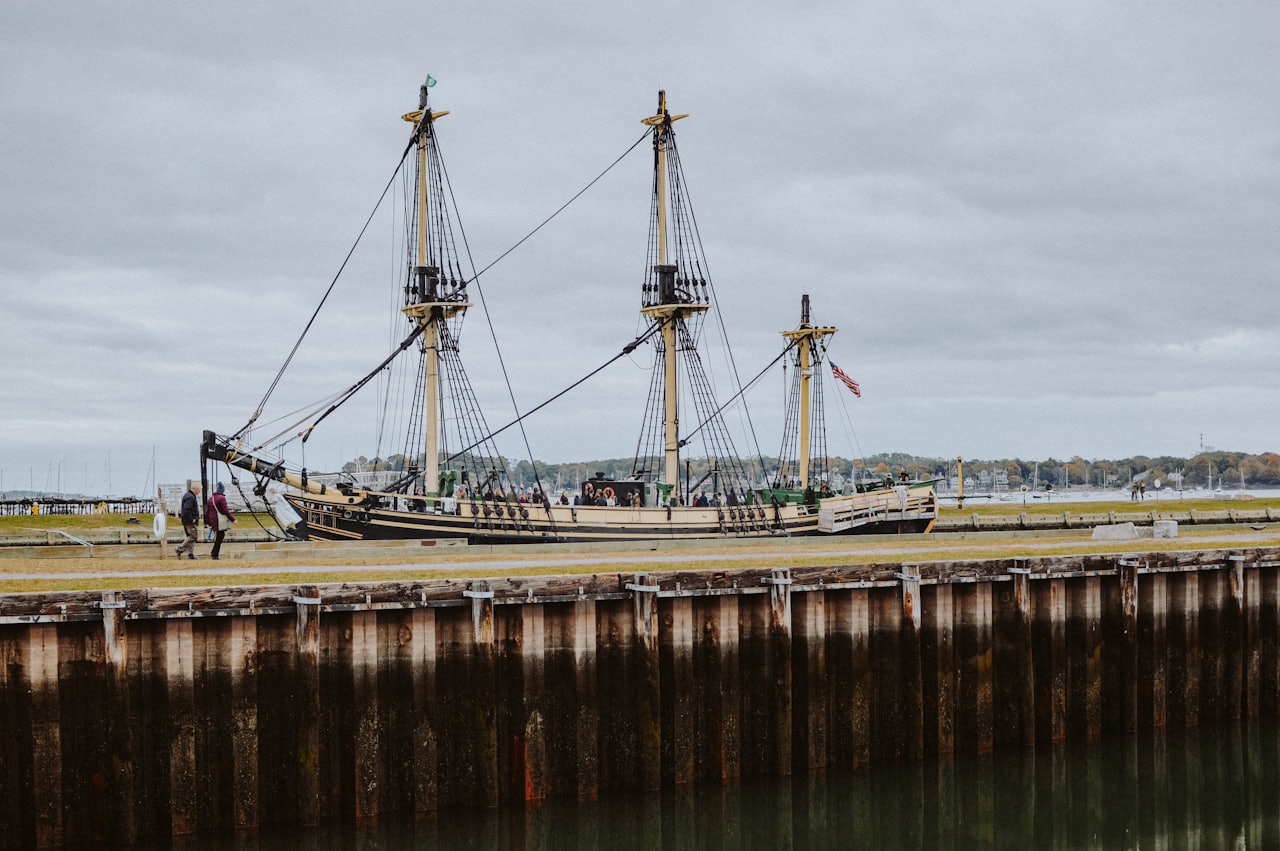
New England Heritage · 3 Days
Three days tracing New England’s colonial and founding history. From Boston’s old city to the fields of Lexington and Concord and the living history of Plymouth, the route follows a chain of cause and effect toward independence. Its real distinction is the interpretation — including a discipline of respect at Plimoth Patuxet that sets it apart.
View journey